
Close Menu
New York Examiner News

    Subscribe to Updates

    Get the latest creative news from FooBar about art, design and business.

    What's Hot

    Bruce Springsteen Leads All-Star Jam Session to Close Power to the People Fest

    October 4, 2026

    I place the world’s top software engineers and interviewed over 10,000 job seekers. The difference on paper and in person is wider than ever

    October 4, 2026

    Tom Homan Calmly Schools Journalist Pushing Liberal Talking Points on Deportation (VIDEO) * The Gateway Pundit * by Mike LaChance

    October 4, 2026
    Facebook X (Twitter) Instagram
    New York Examiner News
    • Home
    • US News
    • Politics
    • Business
    • Science
    • Technology
    • Lifestyle
    • Music
    • Television
    • Film
    • Books
    • Contact
      • About
      • Amazon Disclaimer
      • DMCA / Copyrights Disclaimer
      • Terms and Conditions
      • Privacy Policy
    New York Examiner News
    Home»Science»Kindness Can Have Unexpectedly Positive Consequences
    Science

    Kindness Can Have Unexpectedly Positive Consequences

    By AdminDecember 26, 2022
    Facebook Twitter Pinterest LinkedIn WhatsApp Email Reddit Telegram
    Kindness Can Have Unexpectedly Positive Consequences


    Scientists who study happiness know that being kind to others can improve well-being. Acts as simple as buying a cup of coffee for someone can boost a person’s mood, for example. Everyday life affords many opportunities for such actions, yet people do not always take advantage of them.

    In a set of studies published online in the Journal of Experimental Psychology: General, Nick Epley, a behavioral scientist at the University of Chicago Booth School of Business, and I examined a possible explanation. We found that people who perform random acts of kindness do not always realize how much of an impact they are having on another individual. People consistently and systematically underestimate how others value these acts.

    Across multiple experiments involving approximately 1,000 participants, people performed a random act of kindness—that is, an action done with the primary intention of making someone else (who isn’t expecting the gesture) feel good. Those who perform such actions expect nothing in return.

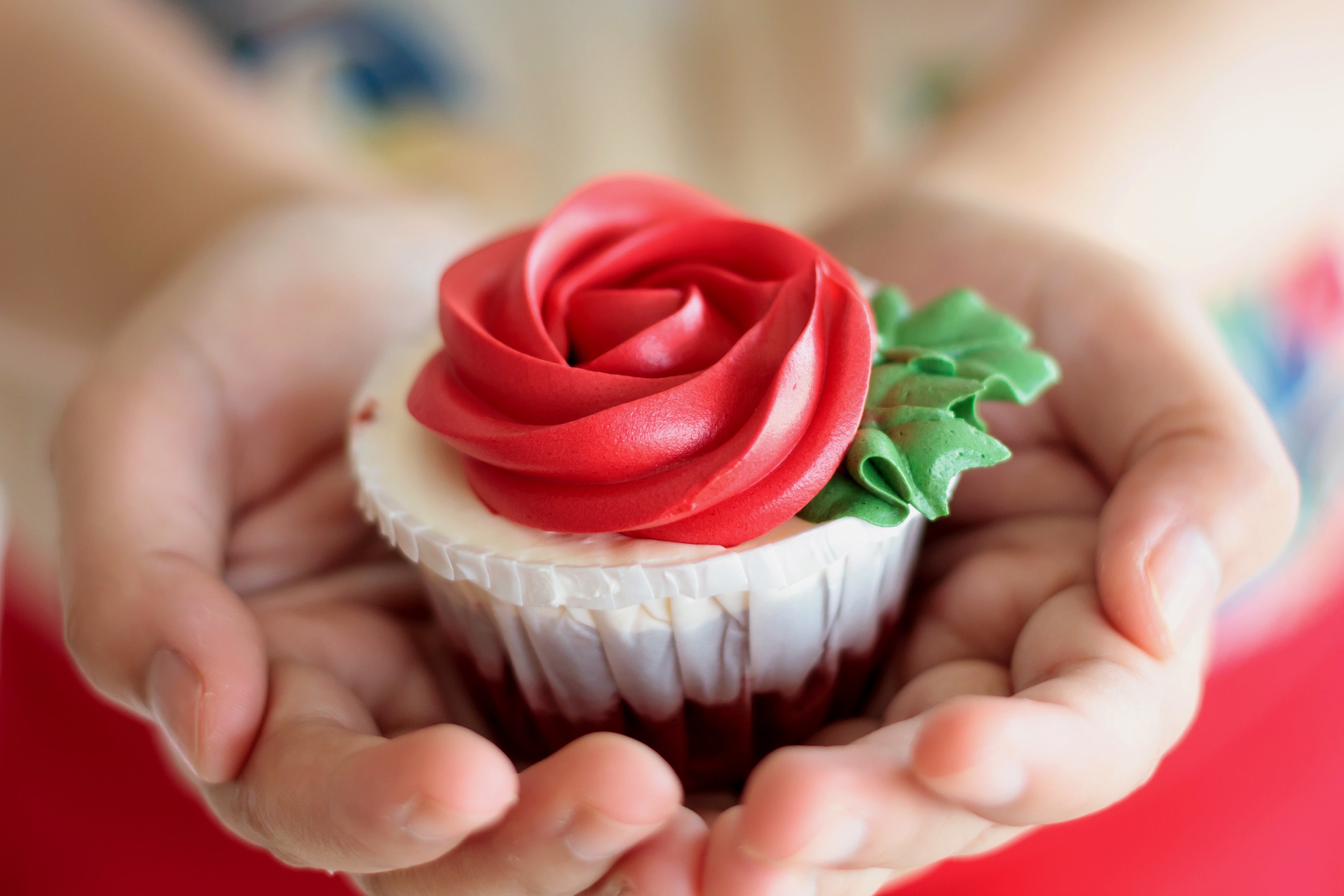
    From one procedure to the next, the specific acts of kindness varied. For instance, in one experiment, people wrote notes to friends and family “just because.” In another, they gave cupcakes away. Across these experiments, we asked both the person performing a kind act and the one receiving it to fill out questionnaires. We asked the person who had acted with kindness to report their own experience and predict their recipient’s response. We wanted to understand how valuable people perceived these acts to be, so both the performer and recipient had to rate how “big” the act seemed. In some cases, we also inquired about the actual or perceived cost in time, money or effort. In all cases, we compared the performer’s expectations of the recipient’s mood with the recipient’s actual experience.

    Across our investigations, several robust patterns emerged. For one, both performers and recipients of the acts of kindness were in more positive moods than normal after these exchanges. For another, it was clear that performers undervalued their impact: recipients felt significantly better than the kind actors expected. The recipients also reliably rated these acts as “bigger” than the people performing them did.

    We initially studied acts of kindness done for familiar people, such as friends, classmates or family. But we found that participants underestimated their positive impact on strangers as well. In one experiment, participants at an ice-skating rink in a public park gave away hot chocolate on a cold winter’s day. Again the experience was more positive than the givers anticipated for the recipients, who were people that just happened to be nearby. While the people giving the hot chocolate saw the act as relatively inconsequential, it really mattered to the recipients.

    Our research also revealed one reason that people may underestimate their action’s impact. When we asked one set of participants to estimate how much someone would like getting a cupcake simply for participating in a study, for example, their predictions were well-calibrated with recipient reactions. But when people received cupcakes through a random act of kindness, the cupcake givers underestimated how positive their recipients would feel. Recipients of these unexpected actions tend to focus more on warmth than performers do.

    Our work suggests that simply being part of a positive, prosocial interaction is meaningful beyond whatever it is a person receives. People understand that cupcakes can make folks feel good, to be sure, but it turns out that cupcakes given in kindness can make them feel surprisingly good. When someone is thinking primarily about the tasty treat they are giving away, they may not realize that the warmth of that gesture is an extra ingredient that can make the cupcake even sweeter.

    Missing the importance of warmth may stand in the way of being kinder in daily life. People generally want to perform kind actions—in fact, many of our participants noted that they’d like to do so more often. But our data suggest that underestimating the impact of one’s actions may reduce the likelihood of kindness. If people undervalue this impact, they might not bother to carry out these warm, prosocial behaviors.

    Furthermore, the consequences of these acts may go beyond a single recipient: kindness can be contagious. In another experiment, we had people play an economic game that allowed us to examine what are sometimes called “pay it forward” effects. In this game, participants allocated money between themselves and a person whom they would never meet. People who had just been on the receiving end of a kind act gave substantially more to an anonymous person than those who had not. Meanwhile the person who performed the initial act did not recognize that their generosity would spill over in these downstream interactions.

    These findings suggest that what might seem small when we are deciding whether or not to do something nice for someone else could matter a great deal to the person we do it for. Given that these warm gestures can enhance our own mood and brighten the day of another person, why not choose kindness when we can?

    Are you a scientist who specializes in neuroscience, cognitive science or psychology? And have you read a recent peer-reviewed paper that you would like to write about for Mind Matters? Please send suggestions to Scientific American’s Mind Matters editor Daisy Yuhas at pitchmindmatters@gmail.com.


    Original Source Link

    Share. Facebook Twitter Pinterest LinkedIn WhatsApp Email Reddit Telegram
    Previous ArticleKate Hudson Sees “Way More” Nepo Babies in Industries Beyond Hollywood – The Hollywood Reporter
    Next Article 43 of the Best Movies on Disney+ Right Now

    RELATED POSTS

    How the brain uses memory to imagine what might have been

    October 4, 2026

    A Decade-Long Experiment Is Unlocking the Mysteries of the Ocean’s ‘Deep Reefs’

    October 3, 2026

    Could a giant iceberg really break off Greenland? Scientists check Tom Cruise’s new movie Digger

    October 3, 2026

    There Are Plenty of Reasons to Be Concerned About Bioweapons Development—Even Without AI

    October 2, 2026

    Google’s Project Suncatcher AI data center test has officially launched to space onboard SpaceX rocket

    October 2, 2026

    Measles Is Forcing Hospitals to Adapt to a New Normal

    October 1, 2026
    latest posts

    Bruce Springsteen Leads All-Star Jam Session to Close Power to the People Fest

    Bruce Springsteen and Tom Morello led an all-star jam session to close out the inaugural…

    I place the world’s top software engineers and interviewed over 10,000 job seekers. The difference on paper and in person is wider than ever

    October 4, 2026

    Tom Homan Calmly Schools Journalist Pushing Liberal Talking Points on Deportation (VIDEO) * The Gateway Pundit * by Mike LaChance

    October 4, 2026

    Alhambra police K-9 sniffs out roughly 440 pounds of cocaine during traffic stop

    October 4, 2026

    The Nvidia Shield TV Is 7 Years Old. It Just Got a $100 Price Hike

    October 4, 2026

    How the brain uses memory to imagine what might have been

    October 4, 2026

    Romance Books About Love Across Different Worlds

    October 4, 2026
    Categories
    • Books (1,529)
    • Business (6,433)
    • Events (79)
    • Film (6,367)
    • Lifestyle (4,433)
    • Music (6,498)
    • Politics (6,421)
    • Science (5,785)
    • Technology (6,366)
    • Television (6,059)
    • Uncategorized (9)
    • US News (6,420)
    popular posts

    Investors set their sights on upcoming inflation report as the bear market rally falters

    The stock market may try to regain its footing in the next few sessions, even…

    Spotify Testing NFT Listings for Artists – Billboard

    May 16, 2022

    Gen Z men are turning to the kitchen instead of college—they can make $170,000 without the burden of student debt

    March 2, 2025

    Discover the Best Gym in Sydney’s Central Business District

    November 20, 2023
    Archives
    Browse By Category
    • Books (1,529)
    • Business (6,433)
    • Events (79)
    • Film (6,367)
    • Lifestyle (4,433)
    • Music (6,498)
    • Politics (6,421)
    • Science (5,785)
    • Technology (6,366)
    • Television (6,059)
    • Uncategorized (9)
    • US News (6,420)
    About Us

    We are a creativity led international team with a digital soul. Our work is a custom built by the storytellers and strategists with a flair for exploiting the latest advancements in media and technology.

    Most of all, we stand behind our ideas and believe in creativity as the most powerful force in business.

    What makes us Different

    We care. We collaborate. We do great work. And we do it with a smile, because we’re pretty damn excited to do what we do. If you would like details on what else we can do visit out Contact page.

    Our Picks

    How the brain uses memory to imagine what might have been

    October 4, 2026

    Romance Books About Love Across Different Worlds

    October 4, 2026

    Red Dead Redemption 2 Players Can Now Explore Mexico In Full

    October 4, 2026
    © 2026 New York Examiner News. All rights reserved. All articles, images, product names, logos, and brands are property of their respective owners. All company, product and service names used in this website are for identification purposes only. Use of these names, logos, and brands does not imply endorsement unless specified. By using this site, you agree to the Terms & Conditions and Privacy Policy.

    Type above and press Enter to search. Press Esc to cancel.

    We use cookies on our website to give you the most relevant experience by remembering your preferences and repeat visits. By clicking “Accept All”, you consent to the use of ALL the cookies. However, you may visit "Cookie Settings" to provide a controlled consent.
    Cookie SettingsAccept All
    Manage consent

    Privacy Overview

    This website uses cookies to improve your experience while you navigate through the website. Out of these, the cookies that are categorized as necessary are stored on your browser as they are essential for the working of basic functionalities of the website. We also use third-party cookies that help us analyze and understand how you use this website. These cookies will be stored in your browser only with your consent. You also have the option to opt-out of these cookies. But opting out of some of these cookies may affect your browsing experience.
    Necessary
    Always Enabled
    Necessary cookies are absolutely essential for the website to function properly. These cookies ensure basic functionalities and security features of the website, anonymously.
    CookieDurationDescription
    cookielawinfo-checkbox-analytics11 monthsThis cookie is set by GDPR Cookie Consent plugin. The cookie is used to store the user consent for the cookies in the category "Analytics".
    cookielawinfo-checkbox-functional11 monthsThe cookie is set by GDPR cookie consent to record the user consent for the cookies in the category "Functional".
    cookielawinfo-checkbox-necessary11 monthsThis cookie is set by GDPR Cookie Consent plugin. The cookies is used to store the user consent for the cookies in the category "Necessary".
    cookielawinfo-checkbox-others11 monthsThis cookie is set by GDPR Cookie Consent plugin. The cookie is used to store the user consent for the cookies in the category "Other.
    cookielawinfo-checkbox-performance11 monthsThis cookie is set by GDPR Cookie Consent plugin. The cookie is used to store the user consent for the cookies in the category "Performance".
    viewed_cookie_policy11 monthsThe cookie is set by the GDPR Cookie Consent plugin and is used to store whether or not user has consented to the use of cookies. It does not store any personal data.
    Functional
    Functional cookies help to perform certain functionalities like sharing the content of the website on social media platforms, collect feedbacks, and other third-party features.
    Performance
    Performance cookies are used to understand and analyze the key performance indexes of the website which helps in delivering a better user experience for the visitors.
    Analytics
    Analytical cookies are used to understand how visitors interact with the website. These cookies help provide information on metrics the number of visitors, bounce rate, traffic source, etc.
    Advertisement
    Advertisement cookies are used to provide visitors with relevant ads and marketing campaigns. These cookies track visitors across websites and collect information to provide customized ads.
    Others
    Other uncategorized cookies are those that are being analyzed and have not been classified into a category as yet.
    SAVE & ACCEPT