
Close Menu
New York Examiner News

    Subscribe to Updates

    Get the latest creative news from FooBar about art, design and business.

    What's Hot

    Young Thug YSL Records Surprise-Drop ‘Slime Language 3’ Double Album

    August 29, 2026

    How the Strait of Hormuz crisis forced Asia to rewrite its oil and gas energy strategy

    August 29, 2026

    Treasury Sec. Scott Bessent Schools Elizabeth Warren – Offers Her ‘Foreign Exchange for Dummies’ * The Gateway Pundit * by Mike LaChance

    August 29, 2026
    Facebook X (Twitter) Instagram
    New York Examiner News
    • Home
    • US News
    • Politics
    • Business
    • Science
    • Technology
    • Lifestyle
    • Music
    • Television
    • Film
    • Books
    • Contact
      • About
      • Amazon Disclaimer
      • DMCA / Copyrights Disclaimer
      • Terms and Conditions
      • Privacy Policy
    New York Examiner News
    Home»Science»Nobel Winner Svante Pääbo Discovered the Neandertal in Our Genes
    Science

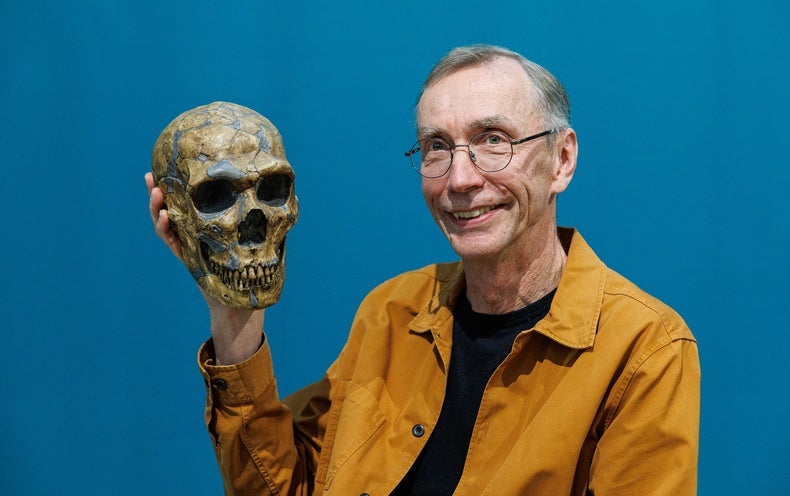
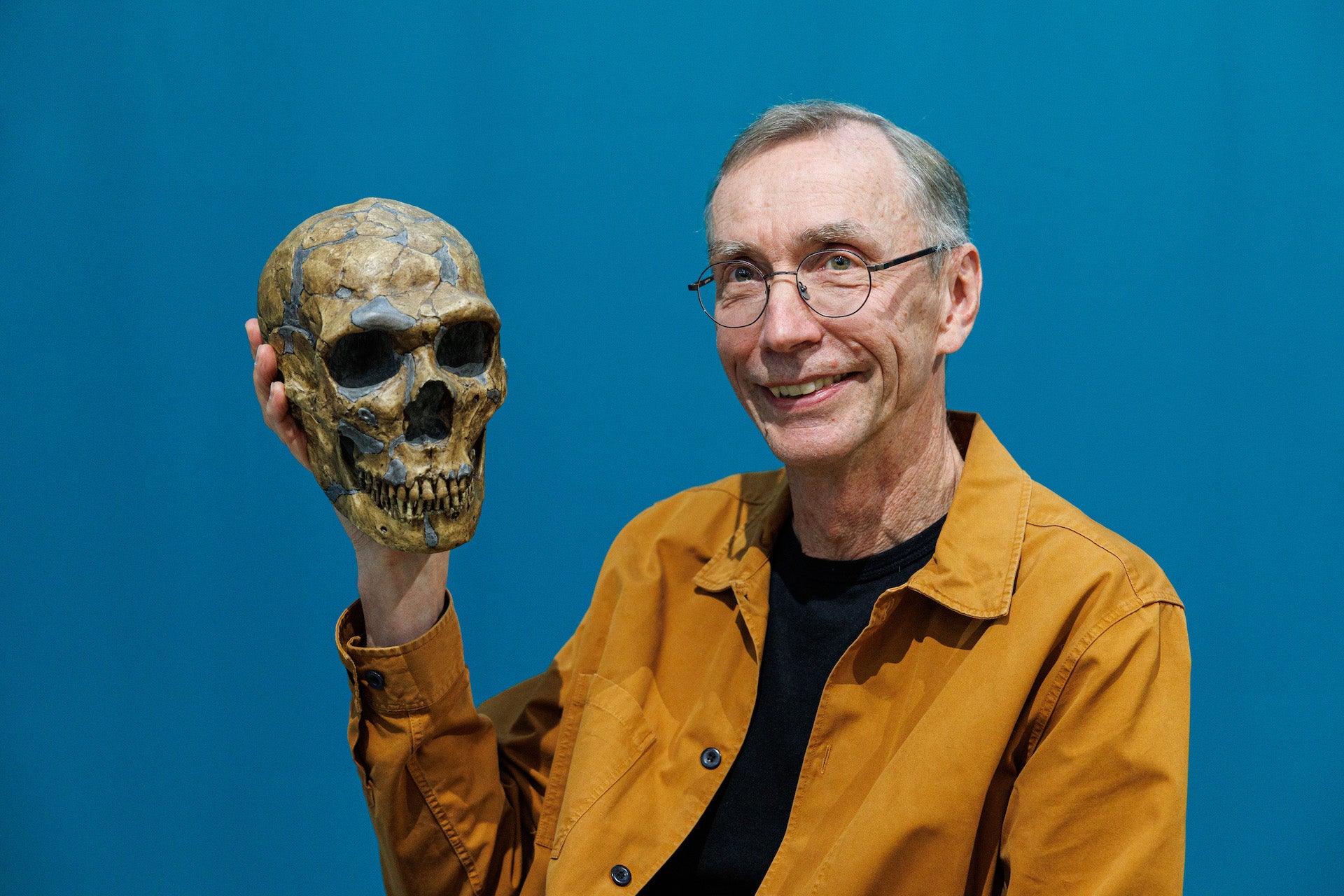
    Nobel Winner Svante Pääbo Discovered the Neandertal in Our Genes

    By AdminOctober 4, 2022
    Facebook Twitter Pinterest LinkedIn WhatsApp Email Reddit Telegram
    Nobel Winner Svante Pääbo Discovered the Neandertal in Our Genes


    Scientists have always been fascinated by the question of human origins: When and where did modern humans—Homo sapiens—first appear? What distinguishes us from other members of the genus Homo and enabled us to develop such unprecedented culture and society?

    Indeed, hardly any question fascinates humanity as much as our own roots. For thousands of years, clerics, scholars and philosophers have been racking their brains about where we come from, who are we and where are we going. The French painter Paul Gauguin was so captivated by that line of inquiry that he even dedicated a painting so named in the 19th century. The work, which deals with both the meaning and the transience of life, remains his most famous.

    We have come a lot closer to answering these big questions thanks in part to the work of the paleogeneticist Svante Pääbo. He achieved what others had long thought impossible: he decoded the genome of Neandertals, a relative of modern humans who went extinct around 30,000 years ago. The Nobel Assembly at the Karolinska Institute in Stockholm honored him this year with the Nobel Prize in Medicine or Physiology for his contribution to the study of human evolution.

    Ancient DNA Is Difficult to Analyze

    When Pääbo began working with ancient DNA in the 1980s, the discovery of Neandertals was long a thing of the past. The first fossils of early humans had already been unearthed in the mid-19th century. At first glance this species seemed to be more closely related to modern humans than almost any other. But just how Neandertals were related to Homo sapiens was a subject of repeated controversy in the decades following the discovery. For example, some wondered whether Neandertals could possibly have been an ancestor of modern humans—a hypothesis that most experts have since rejected.

    Genetic data could undoubtedly shed light on the connection between modern humans and Neandertals. Analyzing the genome of a living species was one thing, but obtaining genetic samples of a species extinct for tens of thousands of years was quite another. Over time, DNA changes chemically and gradually breaks down into short fragments. So after thousands of years, only traces of it remain among bone samples, and those traces are usually heavily contaminated with foreign DNA.

    Journey to the Neandertal

    That didn’t deter Pääbo. As early as 1984, while doing his doctorate at Uppsala University, he caused a small sensation when he managed to isolate DNA from the cells of a 2,400-year-old Egyptian mummy for the first time. Fearing that his doctoral supervisor would forbid him from doing the research, he secretly carried out his studies at night and on weekends, as he later explained. But by the time the journal Nature picked up the results, everyone was talking about his work. At the time it was the only paper published on DNA from fossil tissues.

    Soon after, Pääbo joined Allan Wilson’s group at the University of California, Berkeley. Here he dealt, among other things, with the genome of extinct animals such as mammoths and cave bears. But Neandertals were always among his chief interests, Pääbo told Spektrum der Wissenschaft in 2008. Ultimately, he wanted to find out what makes humans human, and which genetic changes contributed to human evolution.

    In 1990 he continued this research at the University of Munich. There he decided to focus first on mitochondrial DNA, copies of which are present in a significantly higher number inside the cell nucleus compared to DNA. In 1997 he finally succeeded in isolating the genetic material from an approximately 40,000-year-old Neanderthal bone that was part of a Neandertal skeleton found near Düsseldorf in the 1850s. This was the first time the world had access to a piece of Neandertal genome.

    Comparisons with the mitochondrial DNA of modern humans and chimpanzees soon showed that the Neandertals differed genetically from both species: Homo sapiens and Homo neanderthalensis did not share more than 10 percent of their genes.

    Genes in Common

    In contrast to the DNA from the cell nucleus, the mitochondrial genome is small. It contains only a fraction of all the genes that a living being possesses and is therefore of limited usefulness. Further progress in the field therefore depended on obtaining the complete Neandertal genome. In order to clear the last hurdle, Pääbo, then the newly appointed director of the recently founded Max Planck Institute for Evolutionary Anthropology in Leipzig, Germany, continued to refine his methods over the coming years. In 2010 he finally made his breakthrough and was able to present the world with the first version of a fully sequenced Neandertal genome.

    Pääbo and his team’s research indicated that the last common ancestor of modern humans and Neandertals must have lived around 800,000 years ago. They also proved gene flow from Neandertals to modern humans: both species apparently interbred in the millennia that they lived simultaneously on earth, primarily in Europe and Asia, where the human genomes sequenced contain 1 to 4 percent Neandertal genes.

    Pääbo and his team also sequenced the genome of Denisova, a hominin whose fossils were found in 2008 in the Denisova Cave in the Altai Mountains in Siberia. The group was not only able to show that the Denisova was a new, previously unknown early human species, but also that the Denisova maintained close contact with ancestors of modern humans; in some regions of Southeast Asia, humans share up to 6 percent of their genes with the extinct Denisovans.

    The Circle Closes

    Today, Pääbo is rightly regarded as one of the founders of paleogenetics. “His work has revolutionized our understanding of the evolutionary history of modern humans,” stated Martin Stratmann, president of the Max Planck Society, in a press release. Chris Stringer of the Natural History Museum in London offered similar praise; that Pääbo is now receiving the Nobel Prize is great news, the paleoanthropologist told Nature.

    Pääbo’s work has not only shed new light on our past. Further studies indicate that our Neandertal heritage also influences our present. For example, some of the genes seem to have an impact on how the immune system reacts to various pathogens. In 2021, Pääbo and his team made headlines when they reported that people with a specific Neandertal variant on the third chromosome were at a higher risk of developing severe COVID-19.

    The answers to the two questions of where we come from and where we are going might end up being more similar than we thought.

    This article originally appeared in Spektrum der Wissenschaft and was reproduced with permission.


    Original Source Link

    Share. Facebook Twitter Pinterest LinkedIn WhatsApp Email Reddit Telegram
    Previous Article10 Most Powerful DC Characters That Supergirl Has Beaten In A Fight
    Next Article Education, security and space edition • TechCrunch

    RELATED POSTS

    Where are all the aliens? A new book explores possible answers

    August 29, 2026

    There Are So Many Conspiracy Theories About Dolly Parton and Vaccines

    August 28, 2026

    Tropical Storm Dolly forms in the Atlantic

    August 28, 2026

    Submit Your Questions: The Great Data Center Backlash

    August 27, 2026

    Is there a ‘window of opportunity’ to prevent Alzheimer’s in women?

    August 27, 2026

    A Mutation Is Making It Easier for Drug-Resistant Malaria to Spread

    August 26, 2026
    latest posts

    Young Thug YSL Records Surprise-Drop ‘Slime Language 3’ Double Album

    Young Thug and his YSL Records surprise-dropped the Slime Language 3 double album late Friday…

    How the Strait of Hormuz crisis forced Asia to rewrite its oil and gas energy strategy

    August 29, 2026

    Treasury Sec. Scott Bessent Schools Elizabeth Warren – Offers Her ‘Foreign Exchange for Dummies’ * The Gateway Pundit * by Mike LaChance

    August 29, 2026

    Greg Abbott orders pause on Flock Safety funding amid privacy concerns

    August 29, 2026

    Nvidia CEO Jensen Huang Took a Call From Donald Trump in the Middle of an All-Hands

    August 29, 2026

    Where are all the aliens? A new book explores possible answers

    August 29, 2026

    4 Months Later, Oliver Queen’s Green Arrow Clone Is DC’s Biggest Summer Mystery

    August 29, 2026
    Categories
    • Books (1,457)
    • Business (6,360)
    • Events (70)
    • Film (6,295)
    • Lifestyle (4,368)
    • Music (6,422)
    • Politics (6,345)
    • Science (5,712)
    • Technology (6,293)
    • Television (5,983)
    • Uncategorized (9)
    • US News (6,348)
    popular posts

    RuPaul’s Drag Race Season 15 Episode 9 Review: The Crystal Ball: Episode 200

    Two hundred episodes?! Drag Race has made its mark in herstory. It’s an…

    Nirvana Song Breaks Top 50 on 2 Charts After ‘Batman’ Boost

    July 23, 2022

    U.S.-Canada Flight Bookings Have Totally Collapsed amid Ongoing Trade War — Down by Over 75 Percent! | The Gateway Pundit

    March 27, 2025

    An RD Breaks Down These Top TikTok Health Trends

    February 4, 2023
    Archives
    Browse By Category
    • Books (1,457)
    • Business (6,360)
    • Events (70)
    • Film (6,295)
    • Lifestyle (4,368)
    • Music (6,422)
    • Politics (6,345)
    • Science (5,712)
    • Technology (6,293)
    • Television (5,983)
    • Uncategorized (9)
    • US News (6,348)
    About Us

    We are a creativity led international team with a digital soul. Our work is a custom built by the storytellers and strategists with a flair for exploiting the latest advancements in media and technology.

    Most of all, we stand behind our ideas and believe in creativity as the most powerful force in business.

    What makes us Different

    We care. We collaborate. We do great work. And we do it with a smile, because we’re pretty damn excited to do what we do. If you would like details on what else we can do visit out Contact page.

    Our Picks

    Where are all the aliens? A new book explores possible answers

    August 29, 2026

    4 Months Later, Oliver Queen’s Green Arrow Clone Is DC’s Biggest Summer Mystery

    August 29, 2026

    Jelly Roll Shocks With Alleged Romance Bunnie Gets Groove Back

    August 29, 2026
    © 2026 New York Examiner News. All rights reserved. All articles, images, product names, logos, and brands are property of their respective owners. All company, product and service names used in this website are for identification purposes only. Use of these names, logos, and brands does not imply endorsement unless specified. By using this site, you agree to the Terms & Conditions and Privacy Policy.

    Type above and press Enter to search. Press Esc to cancel.

    We use cookies on our website to give you the most relevant experience by remembering your preferences and repeat visits. By clicking “Accept All”, you consent to the use of ALL the cookies. However, you may visit "Cookie Settings" to provide a controlled consent.
    Cookie SettingsAccept All
    Manage consent

    Privacy Overview

    This website uses cookies to improve your experience while you navigate through the website. Out of these, the cookies that are categorized as necessary are stored on your browser as they are essential for the working of basic functionalities of the website. We also use third-party cookies that help us analyze and understand how you use this website. These cookies will be stored in your browser only with your consent. You also have the option to opt-out of these cookies. But opting out of some of these cookies may affect your browsing experience.
    Necessary
    Always Enabled
    Necessary cookies are absolutely essential for the website to function properly. These cookies ensure basic functionalities and security features of the website, anonymously.
    CookieDurationDescription
    cookielawinfo-checkbox-analytics11 monthsThis cookie is set by GDPR Cookie Consent plugin. The cookie is used to store the user consent for the cookies in the category "Analytics".
    cookielawinfo-checkbox-functional11 monthsThe cookie is set by GDPR cookie consent to record the user consent for the cookies in the category "Functional".
    cookielawinfo-checkbox-necessary11 monthsThis cookie is set by GDPR Cookie Consent plugin. The cookies is used to store the user consent for the cookies in the category "Necessary".
    cookielawinfo-checkbox-others11 monthsThis cookie is set by GDPR Cookie Consent plugin. The cookie is used to store the user consent for the cookies in the category "Other.
    cookielawinfo-checkbox-performance11 monthsThis cookie is set by GDPR Cookie Consent plugin. The cookie is used to store the user consent for the cookies in the category "Performance".
    viewed_cookie_policy11 monthsThe cookie is set by the GDPR Cookie Consent plugin and is used to store whether or not user has consented to the use of cookies. It does not store any personal data.
    Functional
    Functional cookies help to perform certain functionalities like sharing the content of the website on social media platforms, collect feedbacks, and other third-party features.
    Performance
    Performance cookies are used to understand and analyze the key performance indexes of the website which helps in delivering a better user experience for the visitors.
    Analytics
    Analytical cookies are used to understand how visitors interact with the website. These cookies help provide information on metrics the number of visitors, bounce rate, traffic source, etc.
    Advertisement
    Advertisement cookies are used to provide visitors with relevant ads and marketing campaigns. These cookies track visitors across websites and collect information to provide customized ads.
    Others
    Other uncategorized cookies are those that are being analyzed and have not been classified into a category as yet.
    SAVE & ACCEPT