
Close Menu
New York Examiner News

    Subscribe to Updates

    Get the latest creative news from FooBar about art, design and business.

    What's Hot

    Mac DeMarco Releases Four New Albums

    August 29, 2026

    Meet Casey’s, the stealth pizza empire coming out of Midwest gas stations

    August 29, 2026

    UK Football Kicks Off 2026 Season Against Houston

    August 29, 2026
    Facebook X (Twitter) Instagram
    New York Examiner News
    • Home
    • US News
    • Politics
    • Business
    • Science
    • Technology
    • Lifestyle
    • Music
    • Television
    • Film
    • Books
    • Contact
      • About
      • Amazon Disclaimer
      • DMCA / Copyrights Disclaimer
      • Terms and Conditions
      • Privacy Policy
    New York Examiner News
    Home»Science»The Applause for Jaws despite Flaws
    Science

    The Applause for Jaws despite Flaws

    By AdminMay 27, 2025
    Facebook Twitter Pinterest LinkedIn WhatsApp Email Reddit Telegram
    The Applause for Jaws despite Flaws


    The Applause for Jaws despite Flaws

    Fifty years ago the movie Jaws scared beachgoers and demonized sharks. Now, however, the public and our beaches are evolving a better understanding
    By Chris Pepin-Neff

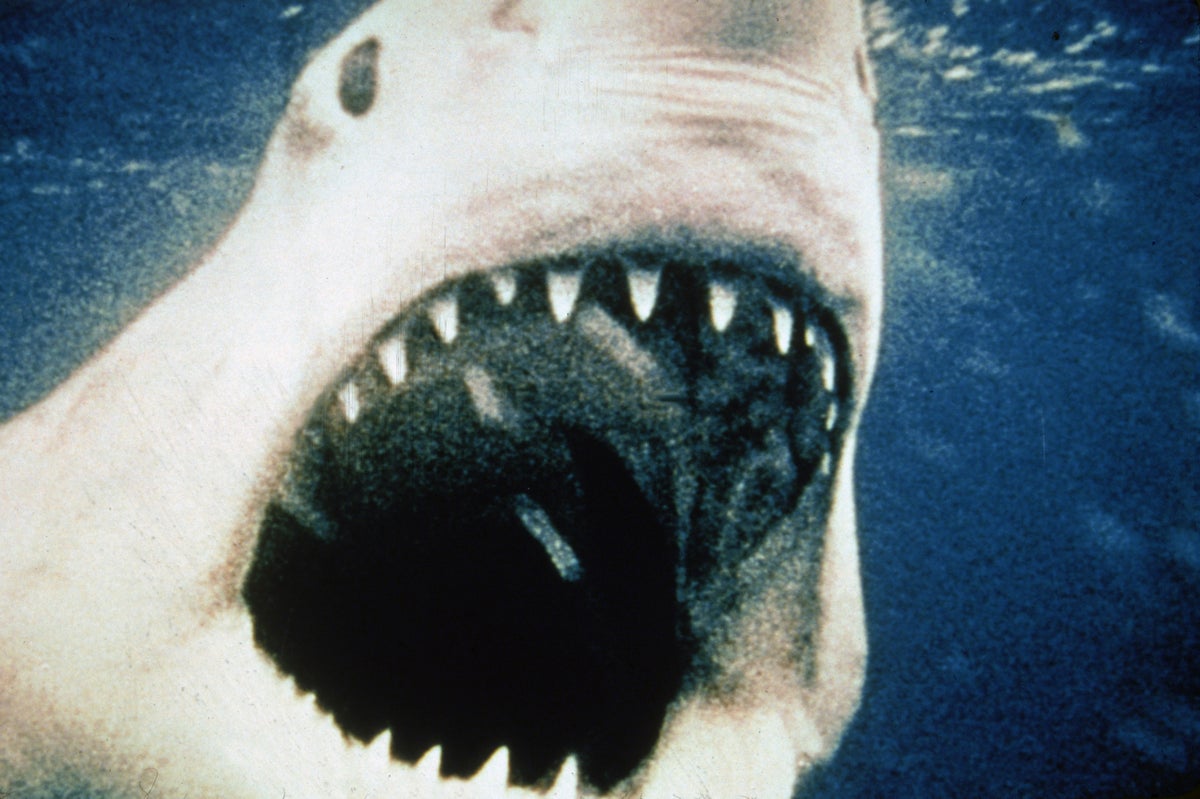
    Film still from Jaws showing great white shark with open mouth

    Universal Pictures/Courtesy of Getty Images

    The motion picture Jaws deserves another round of applause on its 50th birthday despite its flaws. Released on June 20, 1975, this classic invented the summer blockbuster genre, made sharks a familiar (if demonized) foe and gave a visceral picture to the words “shark attack.”

    But today humanity has grown to have a better appreciation for all sharks, even those that swim near the beach. We owe some of the public sentiment that it’s “safe to go back in the water” to Jaws.

    Initially, the movie’s biggest effect came from its portrayal of shark bites as intentional “attacks” on swimmers. The fictional story of a human-shark relationship (and human-ocean relationship) in which humans are on the menu has been one of the most successful Hollywood narratives in motion picture history. More movies, including sequels and spin-offs, have created a lasting narrative and industry of “rogue” sharks, rabid dogs, territorial bears, hungry crocodiles, and other animals that intentionally and sometimes hysterically attack innocent people in classic Sharknado style.


    On supporting science journalism

    If you’re enjoying this article, consider supporting our award-winning journalism by subscribing. By purchasing a subscription you are helping to ensure the future of impactful stories about the discoveries and ideas shaping our world today.


    The public believed this story of intentionality so completely that it came to see every shark bite as essentially a murder, and every shark as a potential murderer, with the beach as the scene of a crime committed by a deviant monster against innocent beachgoers. Importantly, the rogue narrative of sharks gaining a taste for human flesh predated Jaws and was largely invented by Australian surgeon Victor Coppleson in the 1950s. Peter Benchley’s original 1974 novel Jaws and the blockbuster movie that adapted it provided the justification for, and weakened pushback against, all the antishark public policies that followed, including revenge shark hunts, shark derbies, changes to fishery laws that classified sharks as waste fish, delays in enacting shark conservation and the placement of lethal shark nets on some of the world’s beaches.

    Another piece of the Jaws story was its portrayal of an innocent coastal community being preyed upon. Here, beachgoers were not cast as large land animals entering into the foreign domain of a dynamic marine ecosystem but as property owners and recreational water users who had the right to expect nature to behave in a domesticated manner. This misconception that the beach is safe introduced as big a falsehood to the public as the idea that all sharks are dangerous. The ocean is constantly in flux. The direct opposite of a “shark bites are intentional attacks” narrative would be a truer but much less Oscar-worthy story about the beach as a wild, dynamic and active ocean environment.

    In a 2014 paper in the Australian Journal of Political Science, I argued that politicians use familiar fictional films and movies as the basis for explaining real-life events—and proposed the term “Jaws effect” to describe the phenomenon. As I wrote, the Jaws effect can be seen as a political instrument that uses films to reinforce three themes: “that sharks are intentionally hunting people, that shark bites are fatal events and that killing individual sharks will solve the problem.”

    Following a terrible fatal shark bite in Western Australia in 2000 and subsequent shark bites and encounters, Western Australia’s then premier Colin Barnett repeatedly used the term “rogue sharks.” Barnett asserted such sharks were returning to the beach to attack swimmers and that there needed to be a law to help the government kill specific target sharks that were intent on haunting the local beach community.

    During this period, in the Guardian, Benchley wrote an open letter to the Australian public about the 2000 shark-bite case and the political directive to hunt down the shark responsible. He wrote, “This was not a rogue shark, tantalized by the taste of human flesh and bound now to kill and kill again. Such creatures do not exist, despite what you might have derived from Jaws.”

    The Jaws effect, however, continues in Australia today. In 2024 the District Council of Elliston passed a motion to allow fisheries officers in South Australia to kill great white sharks following shark bites in that area. The motion stated, “Sharks are capable of learned behavior. The purpose of terminating the shark responsible for an attack is to prevent that shark from using that behavior to harm another person.”

    Yet, at 50 years old, Jaws is also a celebration of sharks, and the film created a fascination that helped lead to more than two generations of new shark researchers. Indeed, some of the people who have done the most for shark conservation worked on Jaws. Cinematographer Valerie Taylor helped collect footage of sharks that was used in the movie. And in Australia’s state of New South Wales, Taylor was also one of the leaders in the creation of conservation laws to protect the gray nurse shark, which became the first protected species of shark in 1984. Additionally, the late Leonard Compagno, who was a scientist and consultant on Jaws, led an effort to protect white sharks in South Africa. The idea that Jaws led to bad public relations is too simple a story. Our reading of the movie and understanding real-life sharks, the public and our beaches are evolving. Jaws is better at 50, sharks are seen more positively in 2025, and the public is more engaged in shark conservation and beach safety. Earlier this year in Australia, I presented the first yearly Jawsie Awards. The awards include one given to the most outlandish reports of shark attacks and are intended spur real beach safety awareness .

    I would be remiss if I did not note the connection between Jaws, the false rogue shark theory and current debate over orcas ramming into yachts off the Strait of Gibraltar. Both National Geographic and the BBC, for example, have run headlines about such “rogue” orcas. In the mix of stories to explain this behavior, a few claimed that it was an “orca scorned”–type of situation in which a female orca had been traumatized by a boat previously and was now training her young to attack boats in revenge. That’s very Jaws, or perhaps Jaws 3, but there will be no awards for this “fish story.”

    This is an opinion and analysis article, and the views expressed by the author or authors are not necessarily those of Scientific American.


    Original Source Link

    Share. Facebook Twitter Pinterest LinkedIn WhatsApp Email Reddit Telegram
    Previous ArticleImpossible’ Fuel Record Memorial Day Picnic
    Next Article AI may already be shrinking entry-level jobs in tech, new research suggests

    RELATED POSTS

    NASA’s Nancy Grace Roman Space Telescope Has a Hidden Technological Leap

    August 29, 2026

    Where are all the aliens? A new book explores possible answers

    August 29, 2026

    There Are So Many Conspiracy Theories About Dolly Parton and Vaccines

    August 28, 2026

    Tropical Storm Dolly forms in the Atlantic

    August 28, 2026

    Submit Your Questions: The Great Data Center Backlash

    August 27, 2026

    Is there a ‘window of opportunity’ to prevent Alzheimer’s in women?

    August 27, 2026
    latest posts

    Mac DeMarco Releases Four New Albums

    Mac DeMarco fans awoke to a surprise on Friday: four new albums from the singer-songwriter.…

    Meet Casey’s, the stealth pizza empire coming out of Midwest gas stations

    August 29, 2026

    UK Football Kicks Off 2026 Season Against Houston

    August 29, 2026

    Triathlete who survived alligator attack tells harrowing story of his escape: ‘I got super lucky’

    August 29, 2026

    Hollywood celebs are getting into microdrama apps

    August 29, 2026

    NASA’s Nancy Grace Roman Space Telescope Has a Hidden Technological Leap

    August 29, 2026

    Will Forte Celebrates Film’s Long-Awaited Release

    August 29, 2026
    Categories
    • Books (1,458)
    • Business (6,361)
    • Events (70)
    • Film (6,296)
    • Lifestyle (4,369)
    • Music (6,423)
    • Politics (6,346)
    • Science (5,713)
    • Technology (6,294)
    • Television (5,984)
    • Uncategorized (9)
    • US News (6,349)
    popular posts

    Trump says a U.S. digital currency would be ‘tyranny.’ The Biden administration hasn’t mentioned CBDCs since September 2022

    During a campaign stop in New Hampshire, former President Donald Trump vowed to block the…

    Miya Folick Announces New Album Roach, Shares Video for New Song: Watch

    January 20, 2023

    Utah sets nighttime teen TikTok and Instagram curfew

    March 24, 2023

    Bobby Braddock, Lainey Wilson, Tim McGraw & More Celebrated at Nashville Songwriter Awards – Billboard

    September 27, 2023
    Archives
    Browse By Category
    • Books (1,458)
    • Business (6,361)
    • Events (70)
    • Film (6,296)
    • Lifestyle (4,369)
    • Music (6,423)
    • Politics (6,346)
    • Science (5,713)
    • Technology (6,294)
    • Television (5,984)
    • Uncategorized (9)
    • US News (6,349)
    About Us

    We are a creativity led international team with a digital soul. Our work is a custom built by the storytellers and strategists with a flair for exploiting the latest advancements in media and technology.

    Most of all, we stand behind our ideas and believe in creativity as the most powerful force in business.

    What makes us Different

    We care. We collaborate. We do great work. And we do it with a smile, because we’re pretty damn excited to do what we do. If you would like details on what else we can do visit out Contact page.

    Our Picks

    NASA’s Nancy Grace Roman Space Telescope Has a Hidden Technological Leap

    August 29, 2026

    Will Forte Celebrates Film’s Long-Awaited Release

    August 29, 2026

    Bill Maher Blasts Democrats for Hypocrisy Over Trump’s Lake Ontario Renaming

    August 29, 2026
    © 2026 New York Examiner News. All rights reserved. All articles, images, product names, logos, and brands are property of their respective owners. All company, product and service names used in this website are for identification purposes only. Use of these names, logos, and brands does not imply endorsement unless specified. By using this site, you agree to the Terms & Conditions and Privacy Policy.

    Type above and press Enter to search. Press Esc to cancel.

    We use cookies on our website to give you the most relevant experience by remembering your preferences and repeat visits. By clicking “Accept All”, you consent to the use of ALL the cookies. However, you may visit "Cookie Settings" to provide a controlled consent.
    Cookie SettingsAccept All
    Manage consent

    Privacy Overview

    This website uses cookies to improve your experience while you navigate through the website. Out of these, the cookies that are categorized as necessary are stored on your browser as they are essential for the working of basic functionalities of the website. We also use third-party cookies that help us analyze and understand how you use this website. These cookies will be stored in your browser only with your consent. You also have the option to opt-out of these cookies. But opting out of some of these cookies may affect your browsing experience.
    Necessary
    Always Enabled
    Necessary cookies are absolutely essential for the website to function properly. These cookies ensure basic functionalities and security features of the website, anonymously.
    CookieDurationDescription
    cookielawinfo-checkbox-analytics11 monthsThis cookie is set by GDPR Cookie Consent plugin. The cookie is used to store the user consent for the cookies in the category "Analytics".
    cookielawinfo-checkbox-functional11 monthsThe cookie is set by GDPR cookie consent to record the user consent for the cookies in the category "Functional".
    cookielawinfo-checkbox-necessary11 monthsThis cookie is set by GDPR Cookie Consent plugin. The cookies is used to store the user consent for the cookies in the category "Necessary".
    cookielawinfo-checkbox-others11 monthsThis cookie is set by GDPR Cookie Consent plugin. The cookie is used to store the user consent for the cookies in the category "Other.
    cookielawinfo-checkbox-performance11 monthsThis cookie is set by GDPR Cookie Consent plugin. The cookie is used to store the user consent for the cookies in the category "Performance".
    viewed_cookie_policy11 monthsThe cookie is set by the GDPR Cookie Consent plugin and is used to store whether or not user has consented to the use of cookies. It does not store any personal data.
    Functional
    Functional cookies help to perform certain functionalities like sharing the content of the website on social media platforms, collect feedbacks, and other third-party features.
    Performance
    Performance cookies are used to understand and analyze the key performance indexes of the website which helps in delivering a better user experience for the visitors.
    Analytics
    Analytical cookies are used to understand how visitors interact with the website. These cookies help provide information on metrics the number of visitors, bounce rate, traffic source, etc.
    Advertisement
    Advertisement cookies are used to provide visitors with relevant ads and marketing campaigns. These cookies track visitors across websites and collect information to provide customized ads.
    Others
    Other uncategorized cookies are those that are being analyzed and have not been classified into a category as yet.
    SAVE & ACCEPT