
Close Menu
New York Examiner News

    Subscribe to Updates

    Get the latest creative news from FooBar about art, design and business.

    What's Hot

    Sully Erna’s Heartfelt Message After Godsmack’s Pol’and’Rock Show

    August 3, 2026

    Trump says negotiations will resume Monday afternoon while Tehran continues Hormuz talks with Oman

    August 3, 2026

    Parents Who Starved Their 75-Day-Old Baby to Death Will Get No Jail Time After Guilty Plea – Guess Who the Judge Is

    August 3, 2026
    Facebook X (Twitter) Instagram
    New York Examiner News
    • Home
    • US News
    • Politics
    • Business
    • Science
    • Technology
    • Lifestyle
    • Music
    • Television
    • Film
    • Books
    • Contact
      • About
      • Amazon Disclaimer
      • DMCA / Copyrights Disclaimer
      • Terms and Conditions
      • Privacy Policy
    New York Examiner News
    Home»Science»The Supreme Court Could Block Climate Change Protections
    Science

    The Supreme Court Could Block Climate Change Protections

    By AdminJuly 1, 2022
    Facebook Twitter Pinterest LinkedIn WhatsApp Email Reddit Telegram
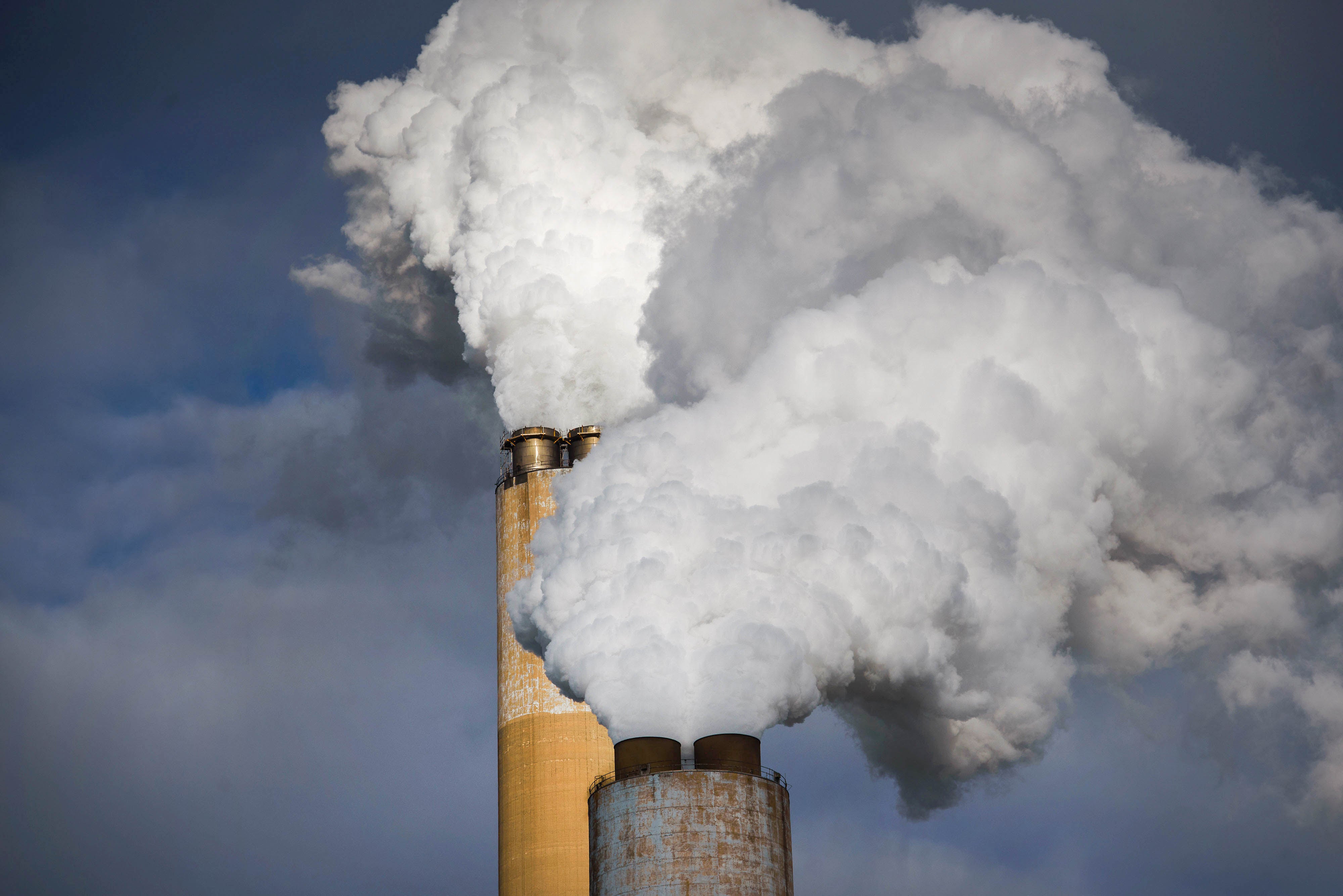
    The Supreme Court Could Block Climate Change Protections


    Editor’s Note (6/30/22): This article is being republished following the Supreme Court’s ruling in West Virginia v. Environmental Protection Agency, which limits the EPA’s ability to regulate greenhouse gas emissions.

    The U.S. Supreme Court is scheduled to hear a case on February 28 that could limit the power of the Environmental Protection Agency to curtail heat-trapping emissions at a time when the clock is ticking on our ability to limit catastrophic climate change.

    West Virginia v. Environmental Protection Agency is a challenge being mounted by several states and coal industry interests on how the agency regulates carbon emissions from power plants under the Clean Air Act. Should SCOTUS find in favor of West Virginia, the ruling could severely impede the EPA’s ability to regulate heat-trapping emissions and other forms of toxic pollution. It could also set a precedent in which federal agencies beyond the EPA could be forced to interpret and implement existing laws very narrowly, which would be greatly detrimental to the public interest.

    It’s surprising that SCOTUS chose to hear the case, because currently the EPA has no regulation to enforce when it comes to curbing emissions from existing power plants. The 2015 Obama administration Clean Power Plan was repealed by the Trump administration and replaced with a weaker rule that many states successfully challenged and got vacated. The Biden administration EPA has not replaced the rule yet, so the legal basis to challenge a nonexistent regulation is highly questionable and the case should be dismissed.

    The EPA’s authority and responsibility to regulate heat-trapping emissions under the Clean Air Act are clearly established in science and law. This is not what the petitioners are directly challenging. The 2007 Supreme Court ruling Massachusetts v. Environmental Protection Agency established that heat-trapping emissions are covered by the Clean Air Act, and the 2009 EPA Endangerment Finding confirmed that these emissions are a threat to public health and the environment. Subsequent court rulings have affirmed EPA’s role repeatedly.

    The current case was brought because opponents of climate action are trying to limit the scope of how EPA regulates polluters going forward. A finding in favor of the petitioners could have implications well beyond the power sector, undermining the EPA’s authority on climate change mitigation and public health protections broadly. In this particular case, the petitioners want to limit the EPA’s authority to just narrow changes at a power plant and exclude options for power system–wide changes that would help make deeper, cost-effective reductions in carbon dioxide emissions. Limiting the scope of options also means that states would have less flexibility to meet pollution standards; for example, they might not be able to allow power producers to shift from fossil fuels to renewable electricity sources as one way to meet a power sector carbon standard.  

    As its contribution to global climate action, the United States has set a goal of cutting its emissions 50 to 52 percent below 2005 levels by 2030. To help meet that goal, the EPA must be able to robustly implement the Clean Air Act, an existing law with bipartisan support that has successfully reduced the environmental and health effects of air pollution. Alongside much-needed new climate policies that Congress should enact, EPA regulations are needed to cut carbon dioxide emissions from the power, transportation and other industrial sectors, as well as methane emissions, which in large part come from the oil and gas sector.

    A ruling against the EPA could also limit its ability to factor in the latest climate science as it makes decisions about strengthening future standards. The latest data describing climate change have only become clearer, their scientific interpretation more dire, as underscored in an amicus brief filed by a number of eminent climate scientists. Numerous scientific studies and assessments and observable evidence affirm that climate impacts are already unfolding in deadly and costly ways and that heat waves, wildfires, flooding, extreme rainfall, drought, ocean acidification, sea level rise and much more will worsen considerably if we fail to take action. The science is clear that global heat-trapping emissions must be sharply curtailed within this decade to prevent significantly more catastrophic consequences, including irreversible tipping points such as massive ice sheet loss triggering multicentury sea level rise.

    “Attribution science,” which connects climate change to extreme weather events, has also grown much stronger. Recent research shows, for example, that the deadly heat wave in the Pacific Northwest last summer would have been virtually impossible without climate change. And compound climate impacts can trigger grave human consequences such as water shortages, food insecurity and the displacement of large populations. Data also show that low-income communities and communities of color bear a disproportionate and unjust burden from pollution, and also from the impacts of the climate crisis. Rather than hamstringing the EPA, we actually need it to go much further faster. 

    Beyond climate change, a ruling against the EPA would make the agency less flexible and effective in responding to new pollutants or toxic chemicals. In general, the Supreme Court has usually given deference to federal agencies in how they interpret protective laws such as the Clean Air Act and the Toxic Substances Control Act. This is because Congress wrote these laws broadly to give agencies forward-looking authority. Congress recognized that it could never fully anticipate new forms of harmful pollution or toxics that might emerge in the future, or new public health dangers, or innovative pollution control technologies that might emerge. If the EPA had to go back and wait for Congress to act each time a new air or water pollutant was created by industry, or new scientific evidence of harms from existing pollutants emerged, the process of updating health-based standards would be untenably cumbersome and slow. By seeking to limit the authority Congress appropriately gave agencies, the petitioners in this case have one overriding purpose: tipping the scales in favor of polluters.

    Unfortunately, given the Supreme Court’s current makeup, it is unclear whether it will uphold the EPA’s existing authority as envisioned by Congress. Its recent ruling overturning a federal COVID-19 vaccine mandate for large companies revealed a court unwilling to uphold the authority of the Occupational Safety and Health Administration to issue science-based guidance, despite clear evidence of its lifesaving value in the midst of a global pandemic.

    That reality makes the dysfunctional partisan politics that pervade Congress today all the more troubling and infuriating. With the Build Back Better Act stalled in Congress, and this latest worrisome development on the legal front, anyone who feels the urgency of this consequential decade for climate action must be deeply concerned. The solutions are well within reach—and yet they have repeatedly slipped from our grasp because of the outsized power of the fossil fuel industry and its allies, and their well-funded assaults on policy progress.

    So much is at stake, including the future we leave to our children and grandchildren; let’s hope the Supreme Court finds its way to being on the right side of history in deciding this consequential case.


    Original Source Link

    Share. Facebook Twitter Pinterest LinkedIn WhatsApp Email Reddit Telegram
    Previous Article15 Best Movies Like The Umbrella Academy
    Next Article AI SpaceFactory and NASA Kennedy Space Center Give Us a First Look at LINA, a 3D-Printed Lunar Outpost Design

    RELATED POSTS

    Eating less protein could help you live longer

    August 3, 2026

    The James Webb Telescope Is Changing Astronomers’ Understanding of the Ancient Cosmos

    August 2, 2026

    AI helped produce two proofs for the same cryptography problem

    August 2, 2026

    Astronomers Have Detected an Exomoon for the First Time

    August 1, 2026

    Postpartum psychosis is at the center of the Lindsay Clancy trial. What is it?

    August 1, 2026

    The World Is Too Hot. El Niño Is Partly to Blame

    July 31, 2026
    latest posts

    Sully Erna’s Heartfelt Message After Godsmack’s Pol’and’Rock Show

    Last Thursday (July 30), Godsmack headlined the 32nd annual Pol’and’Rock Festival in Czaplinek, Poland. According…

    Trump says negotiations will resume Monday afternoon while Tehran continues Hormuz talks with Oman

    August 3, 2026

    Parents Who Starved Their 75-Day-Old Baby to Death Will Get No Jail Time After Guilty Plea – Guess Who the Judge Is

    August 3, 2026

    SummerSlam results: Roman Reigns retains the World Heavyweight Championship

    August 3, 2026

    Best Car Vacuums (2026): Handheld, Cordless, Shopping Tips

    August 3, 2026

    Eating less protein could help you live longer

    August 3, 2026

    Brand New Day’ Box Office Opening at $355M Is Second-Best

    August 3, 2026
    Categories
    • Books (1,404)
    • Business (6,308)
    • Events (64)
    • Film (6,244)
    • Lifestyle (4,319)
    • Music (6,367)
    • Politics (6,290)
    • Science (5,661)
    • Technology (6,240)
    • Television (5,934)
    • Uncategorized (9)
    • US News (6,296)
    popular posts

    Crypto billionaires have lost big money amid the market’s slump

    Crypto billionaires have lost big money amid the market’s slump | Fortune You need to…

    35 Best Father’s Day Gifts for the Dad in Your Life (2022)

    June 15, 2022

    Liam Neeson, Vin Diesel & Movie Dads Who Kick Ass – The Hollywood Reporter

    June 19, 2022

    Slack Discloses Breach of Its Github Code Repository

    January 8, 2023
    Archives
    Browse By Category
    • Books (1,404)
    • Business (6,308)
    • Events (64)
    • Film (6,244)
    • Lifestyle (4,319)
    • Music (6,367)
    • Politics (6,290)
    • Science (5,661)
    • Technology (6,240)
    • Television (5,934)
    • Uncategorized (9)
    • US News (6,296)
    About Us

    We are a creativity led international team with a digital soul. Our work is a custom built by the storytellers and strategists with a flair for exploiting the latest advancements in media and technology.

    Most of all, we stand behind our ideas and believe in creativity as the most powerful force in business.

    What makes us Different

    We care. We collaborate. We do great work. And we do it with a smile, because we’re pretty damn excited to do what we do. If you would like details on what else we can do visit out Contact page.

    Our Picks

    Eating less protein could help you live longer

    August 3, 2026

    Brand New Day’ Box Office Opening at $355M Is Second-Best

    August 3, 2026

    Gayle Rankin Loves That Alys Pisses People Off (Exclusive)

    August 3, 2026
    © 2026 New York Examiner News. All rights reserved. All articles, images, product names, logos, and brands are property of their respective owners. All company, product and service names used in this website are for identification purposes only. Use of these names, logos, and brands does not imply endorsement unless specified. By using this site, you agree to the Terms & Conditions and Privacy Policy.

    Type above and press Enter to search. Press Esc to cancel.

    We use cookies on our website to give you the most relevant experience by remembering your preferences and repeat visits. By clicking “Accept All”, you consent to the use of ALL the cookies. However, you may visit "Cookie Settings" to provide a controlled consent.
    Cookie SettingsAccept All
    Manage consent

    Privacy Overview

    This website uses cookies to improve your experience while you navigate through the website. Out of these, the cookies that are categorized as necessary are stored on your browser as they are essential for the working of basic functionalities of the website. We also use third-party cookies that help us analyze and understand how you use this website. These cookies will be stored in your browser only with your consent. You also have the option to opt-out of these cookies. But opting out of some of these cookies may affect your browsing experience.
    Necessary
    Always Enabled
    Necessary cookies are absolutely essential for the website to function properly. These cookies ensure basic functionalities and security features of the website, anonymously.
    CookieDurationDescription
    cookielawinfo-checkbox-analytics11 monthsThis cookie is set by GDPR Cookie Consent plugin. The cookie is used to store the user consent for the cookies in the category "Analytics".
    cookielawinfo-checkbox-functional11 monthsThe cookie is set by GDPR cookie consent to record the user consent for the cookies in the category "Functional".
    cookielawinfo-checkbox-necessary11 monthsThis cookie is set by GDPR Cookie Consent plugin. The cookies is used to store the user consent for the cookies in the category "Necessary".
    cookielawinfo-checkbox-others11 monthsThis cookie is set by GDPR Cookie Consent plugin. The cookie is used to store the user consent for the cookies in the category "Other.
    cookielawinfo-checkbox-performance11 monthsThis cookie is set by GDPR Cookie Consent plugin. The cookie is used to store the user consent for the cookies in the category "Performance".
    viewed_cookie_policy11 monthsThe cookie is set by the GDPR Cookie Consent plugin and is used to store whether or not user has consented to the use of cookies. It does not store any personal data.
    Functional
    Functional cookies help to perform certain functionalities like sharing the content of the website on social media platforms, collect feedbacks, and other third-party features.
    Performance
    Performance cookies are used to understand and analyze the key performance indexes of the website which helps in delivering a better user experience for the visitors.
    Analytics
    Analytical cookies are used to understand how visitors interact with the website. These cookies help provide information on metrics the number of visitors, bounce rate, traffic source, etc.
    Advertisement
    Advertisement cookies are used to provide visitors with relevant ads and marketing campaigns. These cookies track visitors across websites and collect information to provide customized ads.
    Others
    Other uncategorized cookies are those that are being analyzed and have not been classified into a category as yet.
    SAVE & ACCEPT