
Close Menu
New York Examiner News

    Subscribe to Updates

    Get the latest creative news from FooBar about art, design and business.

    What's Hot

    David Bruckner Set to Direct Smile 3

    October 29, 2026

    Upwind raises $400M after walking away from Datadog acquisition offer | TechCrunch

    October 28, 2026

    Bono admits U2s Songs of Innocence iTunes album giveaway went too far

    October 28, 2026
    Facebook X (Twitter) Instagram
    New York Examiner News
    • Home
    • US News
    • Politics
    • Business
    • Science
    • Technology
    • Lifestyle
    • Music
    • Television
    • Film
    • Books
    • Contact
      • About
      • Amazon Disclaimer
      • DMCA / Copyrights Disclaimer
      • Terms and Conditions
      • Privacy Policy
    New York Examiner News
    Home»Science»‘Unsustainable’: How Satellite Swarms Pose a Rising Threat to Astronomy
    Science

    ‘Unsustainable’: How Satellite Swarms Pose a Rising Threat to Astronomy

    By AdminJune 2, 2022
    Facebook Twitter Pinterest LinkedIn WhatsApp Email Reddit Telegram
    ‘Unsustainable’: How Satellite Swarms Pose a Rising Threat to Astronomy

    [ad_1]

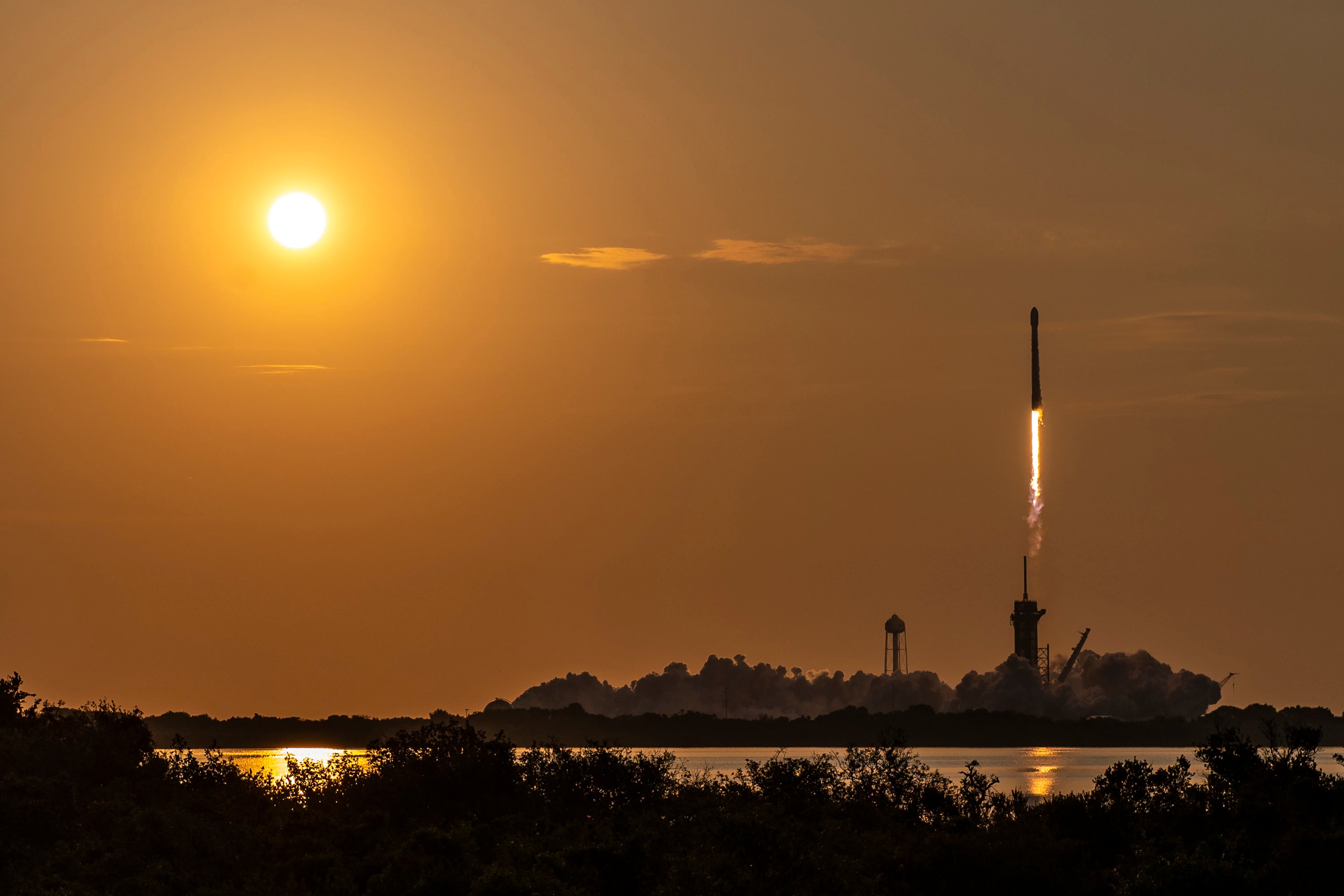
    It’s been three years since SpaceX, an aerospace company in Hawthorne, California, launched its first batch of Starlink Internet-communication satellites, sparking concern among astronomers about the streaks the satellites leave in photographs of the night sky. Since then, many other Starlinks have launched: more than 2,300 of them now orbit Earth, comprising nearly half of all operational satellites.

    Scientists have made some progress in coping with the onslaught. For instance, within days the International Astronomical Union (IAU) will debut a website including tools to help telescope operators predict satellite locations so that they can point their instruments elsewhere.

    But accumulating evidence reveals just how much these satellite ‘megaconstellations’ will interfere with astronomical observatories and other skywatchers around the globe. And satellite companies have not yet found a solution. SpaceX had been trying to address the problem by putting sun-blocking shades on its Starlinks to dim their appearance in the night sky. But Nature has learnt that the company has stopped doing so.

    Tens of thousands of new satellites could be launched in the next few years. “This is an unsustainable trajectory,” says Meredith Rawls, an astronomer at the University of Washington in Seattle. “At the moment, our science is fine. But at what point will we miss a discovery?”

    The toll of megaconstellations

    Since the first Starlinks launched, astronomers have gone from panicking about the satellites photobombing scientific observations to organizing a global response. After a series of international workshops in 2020 and 2021, the IAU set up a Centre for the Protection of the Dark and Quiet Sky from Satellite Constellation Interference. Its soon-to-be-launched website is meant to serve as a hub for astronomers, policymakers, satellite operators and the public to coordinate on how to reduce the impacts of satellites blazing through the skies.

    A recent study suggests that future satellite constellations will be the most visible during summer nights at latitudes of around 50 degrees south and 50 degrees north, where many European and Canadian astronomical facilities are based. If SpaceX and other companies launch the 65,000 satellites they have proposed, bright dots will buzz across the skies all night long at those latitudes around the summer solstice, the study says. In the hours around sunrise and sunset, about one in every 14 stars visible to the naked eye will actually be a satellite.

    “It’s really quite horrifying,” says Samantha Lawler, an astronomer at the University of Regina in Canada, who led the work.

    Astronomical observatories that study wide expanses of the sky rather than focusing on individual celestial objects will be most affected. The Zwicky Transient Facility (ZTF), which surveys wide swathes of the sky using a 1.2-metre telescope on Palomar Mountain, California, had satellite streaks in 18% of its images taken during twilight in August 2021. And that number has gone up as satellite numbers have increased, says lead author Przemek Mróz, an astronomer at the University of Warsaw. He ran a preliminary analysis of ZTF data from April 2022 and found that satellite streaks affected about 20–25% of twilight images.

    So far, the ZTF hasn’t had many of its measurements damaged by satellite streaks, in part because its image-processing methods can detect and mask satellite trails, Mróz says. But other observatories face larger challenges — particularly the Vera C. Rubin Observatory, an 8.4-metre-wide telescope funded by the United States and under construction in Chile. Because it will photograph the entire visible sky every three days, it will be particularly vulnerable to satellite streaks trailing through its images. Rawls and other astronomers are working on ways to mitigate the damage, such as algorithms that can identify and erase satellite streaks from the data. But fixing the data still takes a lot of time and energy. “It’s certainly eating my career,” Rawls says.

    A busy sky

    The growing number of satellites also threatens to negatively affect the field of radio astronomy and to increase the amount of space debris. Other, broader impacts could affect life worldwide: the presence of satellites contributes to a background glow in the sky that can disorient animals that rely on celestial navigation. Satellite streaks can also interfere with human knowledge systems, such as Indigenous knowledge systems that rely on information from dark skies to mark important events throughout the year.

    The growing threat of satellite constellations adds to other degradations of the night sky such as light pollution, says Karlie Noon, a PhD candidate in astronomy and an Indigenous research associate at the Australian National University in Canberra. “In the same way that our lands were colonized, our skies are now being colonized,” she says. “And this isn’t just Indigenous people.” She points out that companies have launched satellites without necessarily consulting the scientific community.

    Some satellite operators have been working to mitigate the problem. Companies including SpaceX, OneWeb in London and Amazon’s Project Kuiper in Seattle, Washington, have met regularly with the IAU and national astronomical societies about ways to reduce the satellites’ impact. SpaceX has tested methods of dimming its Starlinks, including installing sunshades. The sunshades do reduce the satellites’ brightness, but they appear to have been left off the latest generation of Starlinks. Those satellites, launched since September, use lasers instead of radio to communicate with one another, and the sunshades interfere with those communications.

    SpaceX is instead working on other mitigations such as adding stickers or other materials to satellite mirrors to reflect light away from Earth, David Goldstein, an engineer with the company, said during a webinar hosted by the UK-based Federation of Astronomical Societies (FAS) earlier this month.

    How well that might work is still being sorted out. An unpublished analysis of 102 observations of the brightness of Starlinks over time suggests that those from the new generation seem brighter than those known to have sunshades. However, they are not as bright as the original Starlinks without sunshades, says Anthony Mallama, a retired astronomer in Bowie, Maryland, who ran the analysis.

    Meanwhile, OneWeb has launched 428 of a planned initial set of 648 satellites. They orbit at much higher altitudes than the Starlinks do — 1,200 kilometres compared with 550 kilometres. The satellites are typically fainter than Starlinks simply because they are farther away, but they can vary quite a bit in brightness depending on how they happen to be catching and reflecting sunlight.

    One preliminary study of 50 OneWeb satellites during 2021 found that nearly half of them were a little brighter than the ‘safe’ limit specified by astronomers, says Jeremy Tregloan-Reed, an astronomer at the University of Atacama in Copiapó, Chile. OneWeb says it is committed to reducing the visibility of its satellites; it uses a telescope in Sicily to measure their brightnesses and is drawing on that information to design future satellites that are fainter, Maurizio Vanotti, OneWeb’s vice-president of space infrastructure development and partnerships, told the FAS webinar.

    Amazon’s Project Kuiper, which would add more than 3,200 satellites, plans to launch its first 2 prototype satellites by the end of this year. One of them will contain a sunshade so that the company can compare its ability to dim the satellites’ brightness.

    There are no laws regulating how bright satellites should appear in the night sky, although the IAU and other astronomical organizations have been pushing the United Nations to recognize the problem. Representatives from many nations will discuss protecting the skies at a meeting of the UN’s Committee on the Peaceful Uses of Outer Space that begins in Vienna on 1 June.

    This article is reproduced with permission and was first published on May 26 2022.

    [ad_2]

    Original Source Link

    Share. Facebook Twitter Pinterest LinkedIn WhatsApp Email Reddit Telegram
    Previous ArticleMorbius Bombed – But It’s Returning To Theaters After Marvel Memes
    Next Article DALL·E 2 Artificial Intelligence System Has Created its Own Secret Language Nobody Understands

    RELATED POSTS

    The Exotic Physics Behind a Mysterious 1,000-Mile Cloud on Mars

    October 23, 2026

    What to Know About Shamonda Virus Following the First Reported Human Infection

    October 22, 2026

    Inside the Exclusive Nathan Fielder Interview

    October 22, 2026

    A New Ice Age Was Beginning. Then Humans Started Burning Fossil Fuels

    October 22, 2026

    OpenAI Invests in Startup That Uses Brain Implants to Detect Cancer

    October 21, 2026

    How to See the Orionid Meteor Shower and Other Upcoming Astronomical Events

    October 20, 2026
    latest posts

    David Bruckner Set to Direct Smile 3

    David Bruckner is preparing to make horror fans smile, as the director has signed on…

    Upwind raises $400M after walking away from Datadog acquisition offer | TechCrunch

    October 28, 2026

    Bono admits U2s Songs of Innocence iTunes album giveaway went too far

    October 28, 2026

    The Neighbourhood Announce 2027 Tour Dates

    October 28, 2026

    Frasiers Jane Leeves Makes Candid Confession About Fat Suit

    October 28, 2026

    10 Best Untucked Shirts For Men – All Styles For 2026 | FashionBeans

    October 28, 2026

    Ella Langley & Sienna Spiro, But No ADÉLA: A Closer Look at the 2027 Best New Artist Grammy Race

    October 28, 2026
    Categories
    • Books (1,569)
    • Business (6,481)
    • Events (82)
    • Film (6,414)
    • Lifestyle (4,475)
    • Music (6,543)
    • Politics (6,446)
    • Science (5,818)
    • Technology (6,406)
    • Television (6,109)
    • Uncategorized (9)
    • US News (6,460)
    popular posts

    Tesla shares plunge below Lutnick’s ‘never this cheap’ level

    [ad_1] Tesla Inc.’s stock extended losses Monday, dropping below a price at which Commerce Secretary…

    The Top 20+ Best Beaches You Can’t Miss

    August 12, 2026

    Wall Street thinks there’s a chance the S&P 500 could go 20% higher by 2027

    May 21, 2026

    MAFS alum Lindsey Georgoulis welcomes a baby boy

    March 19, 2025
    Archives
    Browse By Category
    • Books (1,569)
    • Business (6,481)
    • Events (82)
    • Film (6,414)
    • Lifestyle (4,475)
    • Music (6,543)
    • Politics (6,446)
    • Science (5,818)
    • Technology (6,406)
    • Television (6,109)
    • Uncategorized (9)
    • US News (6,460)
    About Us

    We are a creativity led international team with a digital soul. Our work is a custom built by the storytellers and strategists with a flair for exploiting the latest advancements in media and technology.

    Most of all, we stand behind our ideas and believe in creativity as the most powerful force in business.

    What makes us Different

    We care. We collaborate. We do great work. And we do it with a smile, because we’re pretty damn excited to do what we do. If you would like details on what else we can do visit out Contact page.

    Our Picks

    10 Best Untucked Shirts For Men – All Styles For 2026 | FashionBeans

    October 28, 2026

    Ella Langley & Sienna Spiro, But No ADÉLA: A Closer Look at the 2027 Best New Artist Grammy Race

    October 28, 2026

    VCs will make billions on Anthropics IPO, but Amazon is set to make much (much) more | TechCrunch

    October 28, 2026
    © 2026 New York Examiner News. All rights reserved. All articles, images, product names, logos, and brands are property of their respective owners. All company, product and service names used in this website are for identification purposes only. Use of these names, logos, and brands does not imply endorsement unless specified. By using this site, you agree to the Terms & Conditions and Privacy Policy.

    Type above and press Enter to search. Press Esc to cancel.

    We use cookies on our website to give you the most relevant experience by remembering your preferences and repeat visits. By clicking “Accept All”, you consent to the use of ALL the cookies. However, you may visit "Cookie Settings" to provide a controlled consent.
    Cookie SettingsAccept All
    Manage consent

    Privacy Overview

    This website uses cookies to improve your experience while you navigate through the website. Out of these, the cookies that are categorized as necessary are stored on your browser as they are essential for the working of basic functionalities of the website. We also use third-party cookies that help us analyze and understand how you use this website. These cookies will be stored in your browser only with your consent. You also have the option to opt-out of these cookies. But opting out of some of these cookies may affect your browsing experience.
    Necessary
    Always Enabled
    Necessary cookies are absolutely essential for the website to function properly. These cookies ensure basic functionalities and security features of the website, anonymously.
    CookieDurationDescription
    cookielawinfo-checkbox-analytics11 monthsThis cookie is set by GDPR Cookie Consent plugin. The cookie is used to store the user consent for the cookies in the category "Analytics".
    cookielawinfo-checkbox-functional11 monthsThe cookie is set by GDPR cookie consent to record the user consent for the cookies in the category "Functional".
    cookielawinfo-checkbox-necessary11 monthsThis cookie is set by GDPR Cookie Consent plugin. The cookies is used to store the user consent for the cookies in the category "Necessary".
    cookielawinfo-checkbox-others11 monthsThis cookie is set by GDPR Cookie Consent plugin. The cookie is used to store the user consent for the cookies in the category "Other.
    cookielawinfo-checkbox-performance11 monthsThis cookie is set by GDPR Cookie Consent plugin. The cookie is used to store the user consent for the cookies in the category "Performance".
    viewed_cookie_policy11 monthsThe cookie is set by the GDPR Cookie Consent plugin and is used to store whether or not user has consented to the use of cookies. It does not store any personal data.
    Functional
    Functional cookies help to perform certain functionalities like sharing the content of the website on social media platforms, collect feedbacks, and other third-party features.
    Performance
    Performance cookies are used to understand and analyze the key performance indexes of the website which helps in delivering a better user experience for the visitors.
    Analytics
    Analytical cookies are used to understand how visitors interact with the website. These cookies help provide information on metrics the number of visitors, bounce rate, traffic source, etc.
    Advertisement
    Advertisement cookies are used to provide visitors with relevant ads and marketing campaigns. These cookies track visitors across websites and collect information to provide customized ads.
    Others
    Other uncategorized cookies are those that are being analyzed and have not been classified into a category as yet.
    SAVE & ACCEPT