
As tech companies begin to monetize generative AI, the creators on whose work it is trained are asking for their fair share. But so far no one can agree on whether or how much artists should be paid.
A recent open letter from the Authors Guild signed by more than 8,500 writers, including Margaret Atwood, Dan Brown and Jodi Picoult, urges generative AI companies to cease using their works without proper authorization or compensation. Artists, meanwhile, have brought numerous lawsuits against generative AI vendors like Stability AI, MidJourney, and Microsoft regarding copyright and misuse.
Some vendors have pledged to establish “creators’ funds” and other means to pay the artists, authors and musicians whose works they’ve used to develop their generative AI models. Some have even taken the step of actually launching said funds, which they’ve heralded as a move toward more equitable, sustainable generative AI business models.
So how much can creators realistically expect to make from these funds?
It seems like a simple question. But when you dig into the various compensation policies that have been proposed by generative AI vendors, it’s one that proves exceptionally difficult to answer. Trust us — we tried. Repeatedly.
Vague terms
Generative AI models “learn” to create images, music, text and more by picking up on patterns in an enormous number of examples, usually sourced from the publicly accessible web. The examples — typically photos, artwork, audio and text — are often copyrighted or published under a usage license that vendors disregard, and creators are often not even informed that their works are being used in this way.
While some companies developing generative AI tools argue that they’re justified in training on copyrighted works under the “fair use” doctrine, at least in the U.S, it’s a matter that’s unlikely to be settled anytime soon. And legal questions aside, public opinion has largely rallied behind creators, most of whom make a pittance compared to the billions tech and AI companies are raking in.
So vendors including Adobe, Getty Images, Stability AI and YouTube have introduced — or promised to introduce — ways creators can share in their generative AI profits. The trouble is, the companies haven’t been clear about how much, exactly, creators can expect to earn. And for creators considering allowing a vendor to train a model on their works, it doesn’t make the decision easy.
Adobe, which trains its family of generative AI models, called Firefly, on images from its stock asset library Adobe Stock, says that it’ll pay out a once-a-year “bonus” that’s “different for each contributor.” The first was disbursed in early September.
Adobe’s bonus is based primarily on the total number of approved images, vectors or illustrations submitted to Adobe Stock standard or premium that were used for Firefly training and the “number of licenses” their images generated during a year-long period, a spokesperson told me via email. Future bonuses are set to be calculated from new approved images and downloads, meaning that creators can’t count on metrics in a previous bonus period to predict their next payout.
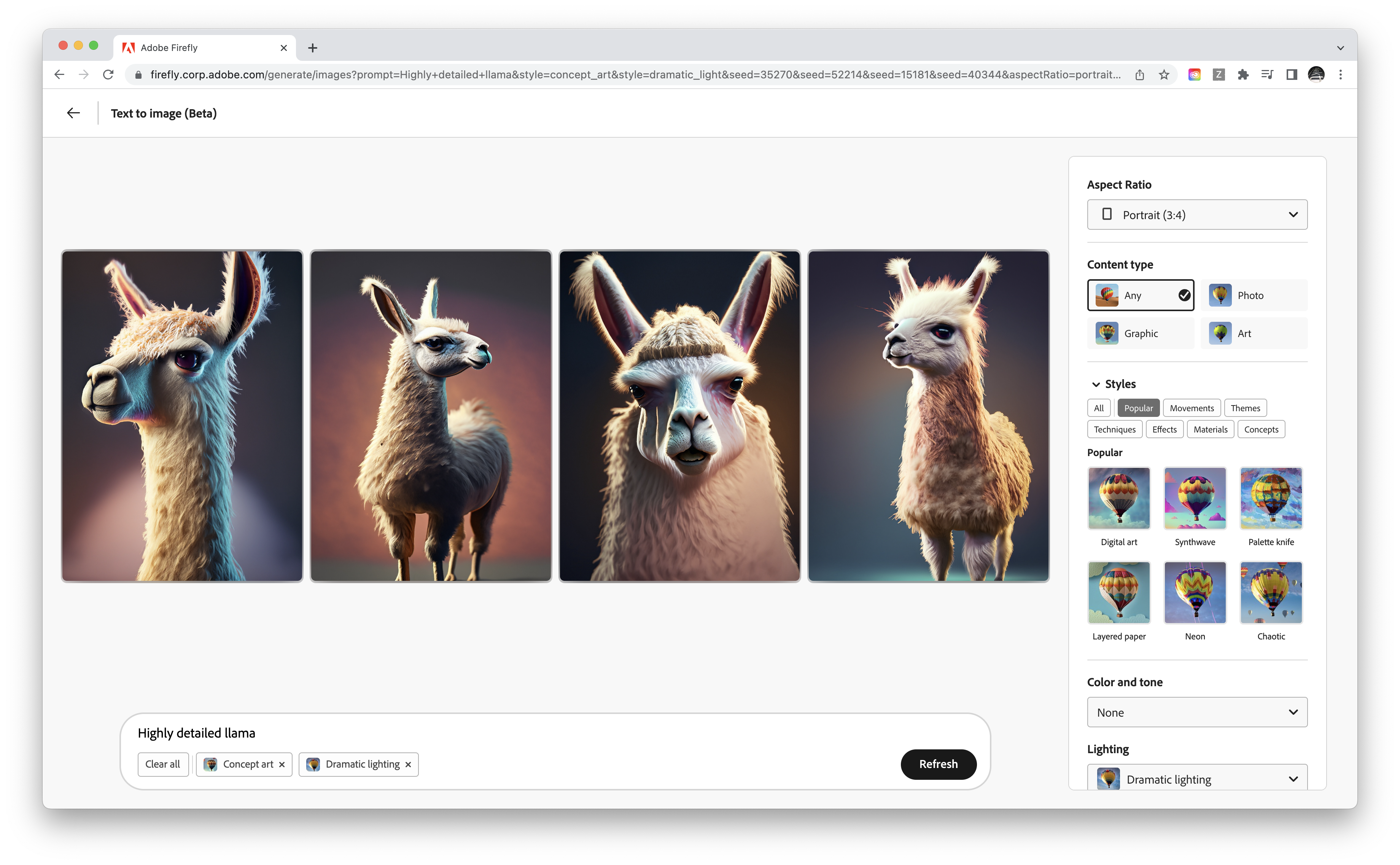
Image Credits: Adobe
What’s each individual approved image and license worth? Unclear. Adobe declined to tell us.
All we know for certain is, contributors have to reach a $25 minimum threshold before they can make a withdrawal (with the exception of contributors who received the first bonus payment, who can withdraw at $1 between September 13 and December 12). It can take 8 to 10 business days or more to complete a withdrawal, Adobe says. And, somewhat alarmingly for contributors, the company makes no guarantee that it’ll pay bonuses in perpetuity.
But wait, it gets more complicated — and opaque.
The Firefly bonus is currently weighted toward the number of licenses issued for an image, the Adobe spokesperson said, which the company considers to be a proxy for the demand and “usefulness” of an image. But to what degree it’s weighted and whether the weighting will change in the future, Adobe wouldn’t say.
Getty Images also plans to pay contributors to its recently-announced generative AI tool on an “annual recurring basis,” according to a spokesperson. Content creators will get a “pro rata” (i.e. proportional) share for each asset they’ve contributed to the model training data set as well as a share based on “traditional licensing revenue.”
We asked for clarification on the licensing bit — and for more information about the pro rata payments arrangement. Like Adobe, though, Getty Images wasn’t forthcoming about the specifics.
“There will be a set formula based on a number of different factors, and accordingly each contributor will receive different payments in connection with the tool,” the spokesperson said.
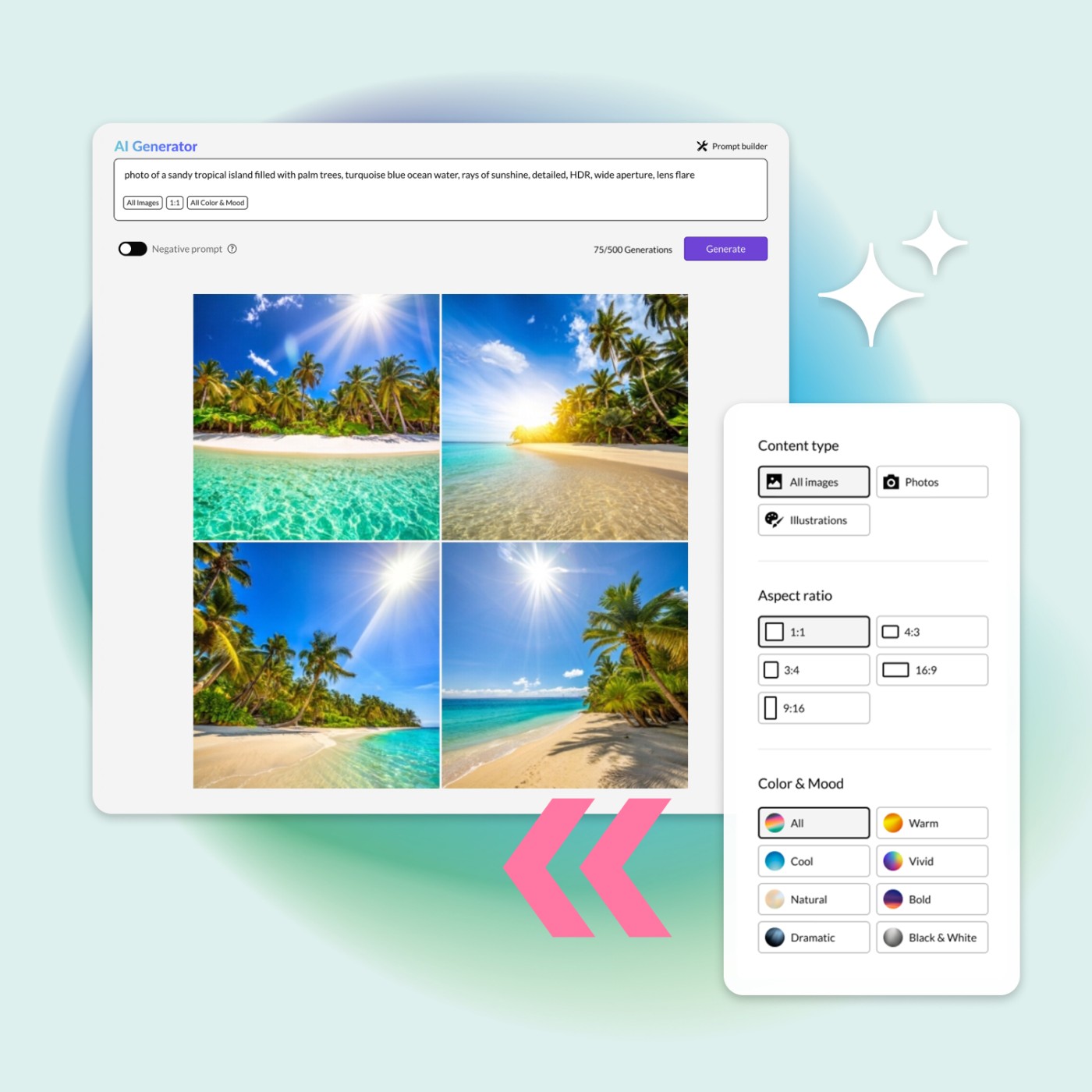
Image Credits: Getty Images
Getty Images competitor Shutterstock, which also offers a set of generative AI tools and sells its metadata and stock images to partners including OpenAI, distributes one-off payments via its Contributors Fund. The twice-a-year payouts are proportional to a creator’s contributions to Shutterstock’s content library, and creators receive additional compensation if new content produced by Shutterstock’s AI generators includes their work.
“Contributors will receive a share of the entire contract value paid by customers licensing data sets,” Shutterstock writes on its website. “Contributors whose content was used to train [models] will be compensated for the role their IP played in the development of the original models, as well as through royalty payments tied to future generative licensing activity.”
What’s the exact proportion, though? And what might that “additional compensation” look like? It’s anyone’s guess.
The best estimate we have is from stock photographer Robert Kneschke, who took it upon himself to survey 58 other photographers how much they were paid from Shutterstock’s Contributors Fund and factor in the size of their portfolio to calculate averages.
Kneschke’s survey found that the average revenue from the Contributors Fund was $0.0078 per image while the median was $0.0069 per image. Assuming those numbers are accurate, a photographer with around 2,000 images would make roughly $15 — not exactly an earth-shatting amount.
No dollar amount
Incredibly, those are the most concrete generative AI compensation schemes we were able to find. The others are more… theoretical.
When Stability AI announced Stable Audio, a model that generates music and sound effects given a text description, the AI startup said that it would — through its partnership with stock audio library AudioSparx — let musicians share in the profits generated by Stable Audio. All they’d have to do is join AudioSparx and opt to participate in the initial model training or decide to help train future versions of Stable Audio.
A few weeks later, the details of that revenue sharing scheme still being hashed out, according to AudioSparx EVP Lee Johnson.
“We haven’t yet received any earnings report from Stability AI, and it’s ‘early days’ still in terms of understanding the revenue that will be generated,” Lee told TechCrunch. “As such, it remains to be seen what sort of earnings the average contributor can expect to earn.”

Image Credits: Stability AI
Lee went on to say that contributors can expect to receive a share of the earnings generated by Stable Audio on a “residual, recurring” basis as long as they’re opted-in to participate in model training.
“Once we receive the first earnings report from Stability AI and are able to fully understand the various metrics and details of the information they’ll provide, we’ll then have the necessary information in hand to fully determine how to allocate the earnings to each of the participating artists,” Lee said. “There’s ongoing discussion between AudioSparx and Stability AI about some of the issues related to the metrics and earnings reporting and so this is all still very much under development.”
Elsewhere on the generative AI music front, YouTube, which in August unveiled a generative AI partnership with Universal Music Group, said that it plans to develop a structure that ensures music rightsholders get paid for their training data contributions. But when contacted for content, YouTube said that it’s in the “very early days” of building monetization models that take generative AI into account.
“A big part of that will be done by collaborating with our partners across the music business,” a YouTube spokesperson said.
Tough luck, creators
Tellingly, none of the generative AI vendors we spoke with would give a dollar amount the average creator can expect to see after forking over their creations for model training.
Some vendors blamed the absence of data on the newness of the tech and business model. Others said that the range would vary too widely to give a useful figure.
But for creators — particularly those dependent on contract income to make ends meet — those are arguments that are likely to ring hollow.
Some startups are attempting to be more transparent — and creator-focused — from the get-go. Braia, which trains its art-generating AI strictly on licensed images, has a revenue sharing model that rewards data owners based on their contributions’ impact, allowing artists to set prices on a per-AI-training-run basis.
So far as we can tell, though, as things stand now, few vendors are making an especially compelling case that it’ll be worth artists’ whiles if they opt in to generative AI model training. At best, they’re offering hazy promises of future riches — and hazy promises don’t pay the rent.