
Close Menu
New York Examiner News

    Subscribe to Updates

    Get the latest creative news from FooBar about art, design and business.

    What's Hot

    5 Meal Prep Lunch Ideas You Can Make in 90 Minutes

    September 30, 2026

    Wonderama Brings the Wonder Games to Times Square, Honors Senator Richard Blumenthal and Teams Up with FENIX360

    September 29, 2026

    How Metallica Fans Can Save Lives at Las Vegas Sphere Shows

    September 29, 2026
    Facebook X (Twitter) Instagram
    New York Examiner News
    • Home
    • US News
    • Politics
    • Business
    • Science
    • Technology
    • Lifestyle
    • Music
    • Television
    • Film
    • Books
    • Contact
      • About
      • Amazon Disclaimer
      • DMCA / Copyrights Disclaimer
      • Terms and Conditions
      • Privacy Policy
    New York Examiner News
    Home»Technology»Risky teleoperation, Rocket League simulation, and zoologist multiplication – TechCrunch
    Technology

    Risky teleoperation, Rocket League simulation, and zoologist multiplication – TechCrunch

    By AdminMay 30, 2022
    Facebook Twitter Pinterest LinkedIn WhatsApp Email Reddit Telegram
    Risky teleoperation, Rocket League simulation, and zoologist multiplication – TechCrunch


    Research in the field of machine learning and AI, now a key technology in practically every industry and company, is far too voluminous for anyone to read it all. This column, Perceptron (previously Deep Science), aims to collect some of the most relevant recent discoveries and papers — particularly in, but not limited to, artificial intelligence — and explain why they matter.

    This week in AI, researchers discovered a method that could allow adversaries to track the movements of remotely-controlled robots even when the robots’ communications are encrypted end-to-end. The coauthors, who hail from the University of Strathclyde in Glasgow, said that their study shows adopting the best cybersecurity practices isn’t enough to stop attacks on autonomous systems.

    Remote control, or teleoperation, promises to enable operators to guide one or several robots from afar in a range of environments. Startups including Pollen Robotics, Beam, and Tortoise have demonstrated the usefulness of teleoperated robots in grocery stores, hospitals, and offices. Other companies develop remotely-controlled robots for tasks like bomb disposal or surveying sites with heavy radiation.

    But the new research shows that teleoperation, even when supposedly “secure,” is risky in its susceptibility to surveillance. The Strathclyde coauthors describe in a paper using a neural network to infer information about what operations a remotely-controlled robot is carrying out. After collecting samples of TLS-protected traffic between the robot and controller and conducting an analysis, they found that the neural network could identify movements about 60% of the time and also reconstruct “warehousing workflows” (e.g., picking up packages) with “high accuracy.”
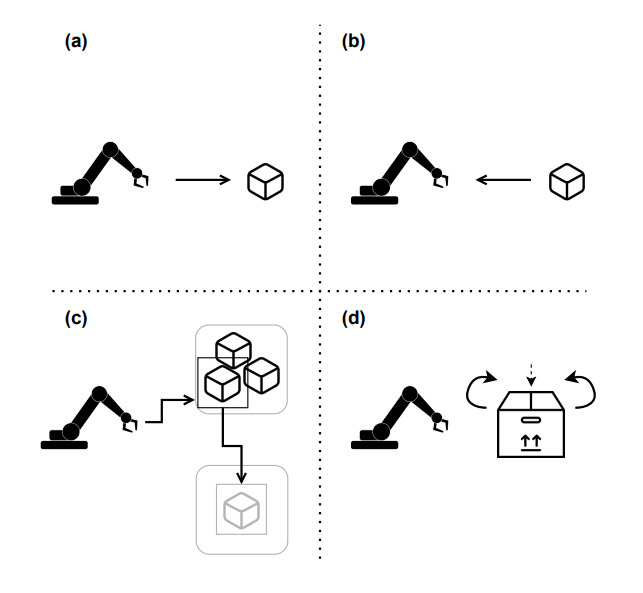
    Teleoperations

    Image Credits: Shah et al.

    Alarming in a less immediate way is a new study from researchers at Google and the University of Michigan that explored peoples’ relationships with AI-powered systems in countries with weak legislation and “nationwide optimism” for AI. The work surveyed India-based, “financially stressed” users of instant loan platforms that target borrowers with credit determined by risk-modeling AI. According to the coauthors, the users experienced feelings of indebtedness for the “boon” of instant loans and an obligation to accept harsh terms, overshare sensitive data, and pay high fees.

    The researchers argue that the findings illustrate the need for greater “algorithmic accountability,” particularly where it concerns AI in financial services. “We argue that accountability is shaped by platform-user power relations, and urge caution to policymakers in adopting a purely technical approach to fostering algorithmic accountability,” they wrote. “Instead, we call for situated interventions that enhance agency of users, enable meaningful transparency, reconfigure designer-user relations, and prompt a critical reflection in practitioners towards wider accountability.”

    In less dour research, a team of scientists at TU Dortmund University, Rhine-Waal University, and LIACS Universiteit Leiden in the Netherlands developed an algorithm that they claim can “solve” the game Rocket League. Motivated to find a less computationally-intensive way to create game-playing AI, the team leveraged what they call a “sim-to-sim” transfer technique, which trained the AI system to perform in-game tasks like goalkeeping and striking within a stripped-down, simplified version of Rocket League. (Rocket League basically resembles indoor soccer, except with cars instead of human players in teams of three.)
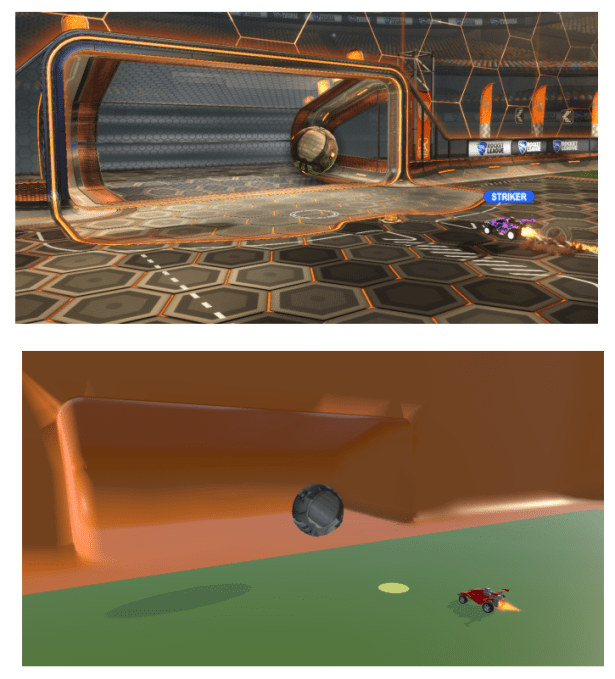
    Rocket League AI

    Image Credits: Pleines et al.

    It wasn’t perfect, but the researchers’ Rocket League-playing system, managed to save nearly all shots fired its way when goalkeeping. When on the offensive, the system successfully scored 75% of shots — a respectable record.

    Simulators for human movements are also advancing at pace. Meta’s work on tracking and simulating human limbs has obvious applications in its AR and VR products, but it could also be used more broadly in robotics and embodied AI. Research that came out this week got a tip of the cap from none other than Mark Zuckerberg.
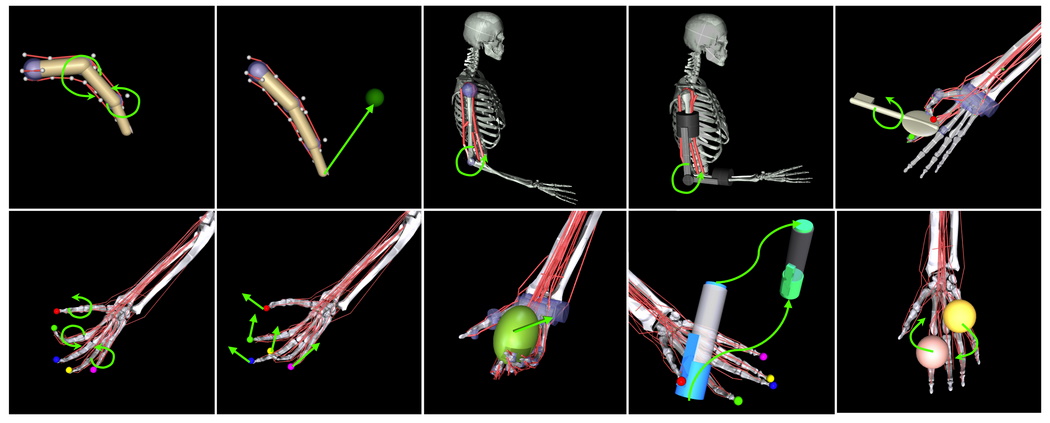
    Simulated skeleton and muscle groups in Myosuite.

    Simulated skeleton and muscle groups in Myosuite.

    MyoSuite simulates muscles and skeletons in 3D as they interact with objects and themselves — this is important for agents to learn how to properly hold and manipulate things without crushing or dropping them, and also in a virtual world provides realistic grips and interactions. It supposedly runs thousands of times faster on certain tasks, which lets simulated learning processes happen much quicker. “We’re going to open source these models so researchers can use them to advance the field further,” Zuck says. And they did!

    Lots of these simulations are agent- or object-based, but this project from MIT looks at simulating an overall system of independent agents: self-driving cars. The idea is that if you have a good amount of cars on the road, you can have them work together not just to avoid collisions, but to prevent idling and unnecessary stops at lights.

    Animation of cars slowing down at a 4-way intersection with a stoplight.

    If you look closely, only the front cars ever really stop.

    As you can see in the animation above, a set of autonomous vehicles communicating using v2v protocols can basically prevent all but the very front cars from stopping at all by progressively slowing down behind one another, but not so much that they actually come to a halt. This sort of hypermiling behavior may seem like it doesn’t save much gas or battery, but when you scale it up to thousands or millions of cars it does make a difference — and it might be a more comfortable ride, too. Good luck getting everyone to approach the intersection perfectly spaced like that, though.

    Switzerland is taking a good, long look at itself — using 3D scanning tech. The country is making a huge map using UAVs equipped with lidar and other tools, but there’s a catch: the movement of the drone (deliberate and accidental) introduces error into the point map that needs to be manually corrected. Not a problem if you’re just scanning a single building, but an entire country?

    Fortunately, a team out of EPFL is integrating an ML model directly into the lidar capture stack that can determine when an object has been scanned multiple times from different angles and use that info to line up the point map into a single cohesive mesh. This news article isn’t particularly illuminating, but the paper accompanying it goes into more detail. An example of the resulting map is visible in the video above.

    Lastly, in unexpected but highly pleasant AI news, a team from the University of Zurich has designed an algorithm for tracking animal behavior so zoologists don’t have to scrub through weeks of footage to find the two examples of courting dances. It’s a collaboration with the Zurich Zoo, which makes sense when you consider the following: “Our method can recognize even subtle or rare behavioral changes in research animals, such as signs of stress, anxiety or discomfort,” said lab head Mehmet Fatih Yanik.

    So the tool could be used both for learning and tracking behaviors in captivity, for the well-being of captive animals in zoos, and for other forms of animal studies as well. They could use fewer subject animals and get more information in a shorter time, with less work by grad students poring over video files late into the night. Sounds like a win-win-win-win situation to me.
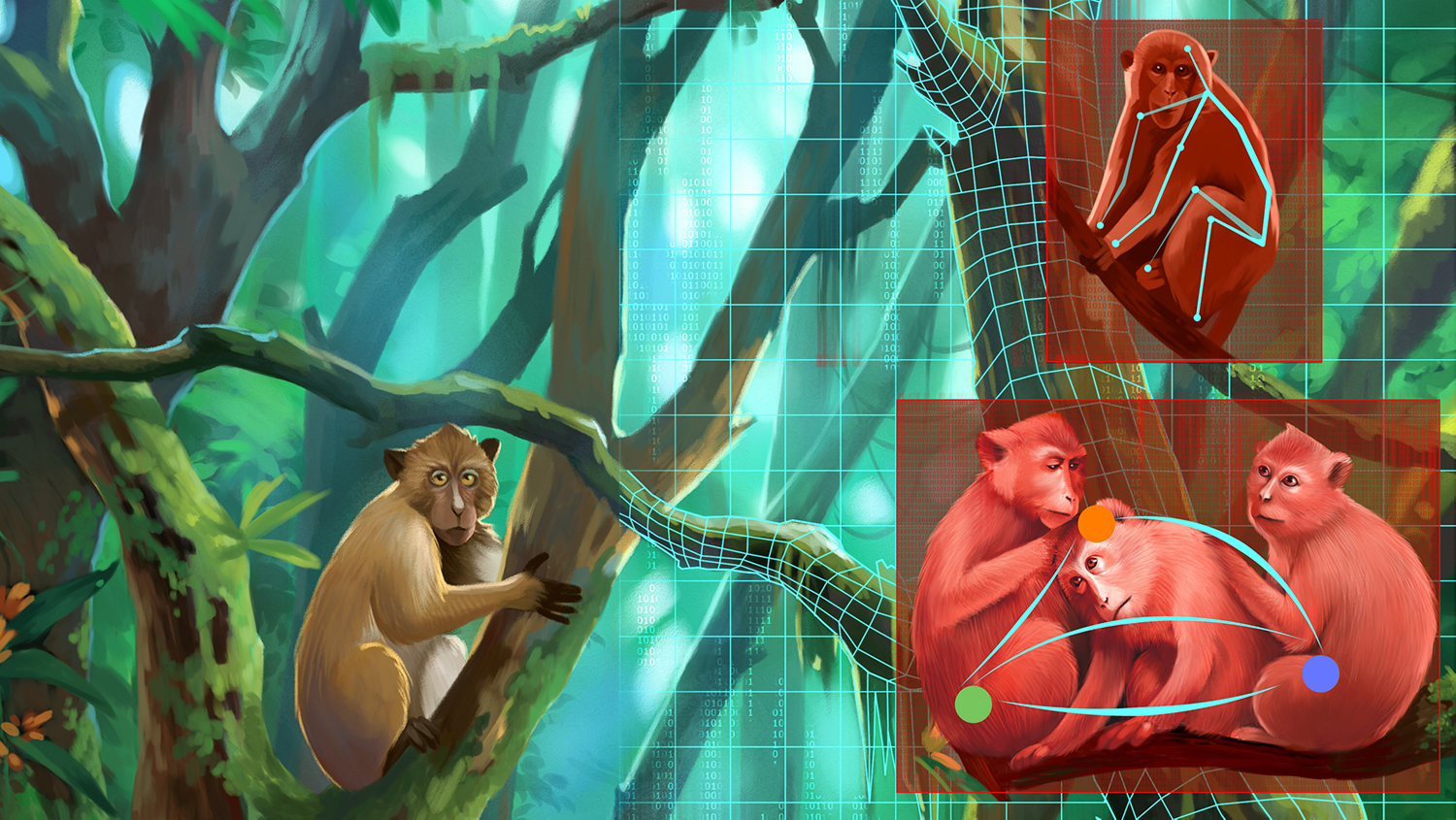
    Illustration of monkeys in a tree being analyzed by an AI.

    Image Credits: Ella Marushenko / ETH Zurich

    Also, love the illustration.


    Original Source Link

    Share. Facebook Twitter Pinterest LinkedIn WhatsApp Email Reddit Telegram
    Previous ArticleElyse Slaine & Reinhold Gebert Split After 4 Years Of Marriage
    Next Article How I saved thousands on my honeymoon flights with points and miles

    RELATED POSTS

    OpenAI takes on Microsoft with the launch of what feels a whole lot like ChatGPT’s own office suite

    September 29, 2026

    50% Off Blue Apron Promo Codes | October 2026

    September 29, 2026

    Google is killing off Gemini’s Gems in favor of ‘skills’

    September 28, 2026

    Best Party Speakers (2026): JBL, Sony, Marshall, and More

    September 28, 2026

    Anthropic’s Dario Amodei gets the SNL treatment

    September 27, 2026

    Old-School Credit Card Scams Are Far From Dead

    September 27, 2026
    latest posts

    5 Meal Prep Lunch Ideas You Can Make in 90 Minutes

    5 Meal Prep Lunch Ideas You Can Make…

    Wonderama Brings the Wonder Games to Times Square, Honors Senator Richard Blumenthal and Teams Up with FENIX360

    September 29, 2026

    How Metallica Fans Can Save Lives at Las Vegas Sphere Shows

    September 29, 2026

    Current price of oil as of Sept. 29, 2026

    September 29, 2026

    DOJ Prosecutors Charge Venezuelan Illegal Shot by ICE for Assaulting Federal Officer * The Gateway Pundit * by Cristina Laila

    September 29, 2026

    Sunny Hostin addresses resurfaced reporting on male holdout juror in murder case

    September 29, 2026

    OpenAI takes on Microsoft with the launch of what feels a whole lot like ChatGPT’s own office suite

    September 29, 2026
    Categories
    • Books (1,520)
    • Business (6,424)
    • Events (78)
    • Film (6,358)
    • Lifestyle (4,425)
    • Music (6,488)
    • Politics (6,412)
    • Science (5,776)
    • Technology (6,357)
    • Television (6,050)
    • Uncategorized (9)
    • US News (6,411)
    popular posts

    Maggie’s David Del Rio Discusses The Unusual Love Triangle on Hulu’s Psychic Rom-Com

    Hulu’s new psychic romantic comedy, Maggie, is different than other rom-coms. It premiered on…

    “Running Up That Hill” Performed in the Style of “Master of Puppets”: Watch

    July 22, 2022

    Trump slams ‘Third World’ raid on his home, says FBI agents rifled through Barron’s, Melania’s belongings

    September 4, 2022

    Bob Dylan covers The Grateful Dead at tour-closing gig

    June 12, 2022
    Archives
    Browse By Category
    • Books (1,520)
    • Business (6,424)
    • Events (78)
    • Film (6,358)
    • Lifestyle (4,425)
    • Music (6,488)
    • Politics (6,412)
    • Science (5,776)
    • Technology (6,357)
    • Television (6,050)
    • Uncategorized (9)
    • US News (6,411)
    About Us

    We are a creativity led international team with a digital soul. Our work is a custom built by the storytellers and strategists with a flair for exploiting the latest advancements in media and technology.

    Most of all, we stand behind our ideas and believe in creativity as the most powerful force in business.

    What makes us Different

    We care. We collaborate. We do great work. And we do it with a smile, because we’re pretty damn excited to do what we do. If you would like details on what else we can do visit out Contact page.

    Our Picks

    Sunny Hostin addresses resurfaced reporting on male holdout juror in murder case

    September 29, 2026

    OpenAI takes on Microsoft with the launch of what feels a whole lot like ChatGPT’s own office suite

    September 29, 2026

    Plastic Is Melting Onto Corals

    September 29, 2026
    © 2026 New York Examiner News. All rights reserved. All articles, images, product names, logos, and brands are property of their respective owners. All company, product and service names used in this website are for identification purposes only. Use of these names, logos, and brands does not imply endorsement unless specified. By using this site, you agree to the Terms & Conditions and Privacy Policy.

    Type above and press Enter to search. Press Esc to cancel.

    We use cookies on our website to give you the most relevant experience by remembering your preferences and repeat visits. By clicking “Accept All”, you consent to the use of ALL the cookies. However, you may visit "Cookie Settings" to provide a controlled consent.
    Cookie SettingsAccept All
    Manage consent

    Privacy Overview

    This website uses cookies to improve your experience while you navigate through the website. Out of these, the cookies that are categorized as necessary are stored on your browser as they are essential for the working of basic functionalities of the website. We also use third-party cookies that help us analyze and understand how you use this website. These cookies will be stored in your browser only with your consent. You also have the option to opt-out of these cookies. But opting out of some of these cookies may affect your browsing experience.
    Necessary
    Always Enabled
    Necessary cookies are absolutely essential for the website to function properly. These cookies ensure basic functionalities and security features of the website, anonymously.
    CookieDurationDescription
    cookielawinfo-checkbox-analytics11 monthsThis cookie is set by GDPR Cookie Consent plugin. The cookie is used to store the user consent for the cookies in the category "Analytics".
    cookielawinfo-checkbox-functional11 monthsThe cookie is set by GDPR cookie consent to record the user consent for the cookies in the category "Functional".
    cookielawinfo-checkbox-necessary11 monthsThis cookie is set by GDPR Cookie Consent plugin. The cookies is used to store the user consent for the cookies in the category "Necessary".
    cookielawinfo-checkbox-others11 monthsThis cookie is set by GDPR Cookie Consent plugin. The cookie is used to store the user consent for the cookies in the category "Other.
    cookielawinfo-checkbox-performance11 monthsThis cookie is set by GDPR Cookie Consent plugin. The cookie is used to store the user consent for the cookies in the category "Performance".
    viewed_cookie_policy11 monthsThe cookie is set by the GDPR Cookie Consent plugin and is used to store whether or not user has consented to the use of cookies. It does not store any personal data.
    Functional
    Functional cookies help to perform certain functionalities like sharing the content of the website on social media platforms, collect feedbacks, and other third-party features.
    Performance
    Performance cookies are used to understand and analyze the key performance indexes of the website which helps in delivering a better user experience for the visitors.
    Analytics
    Analytical cookies are used to understand how visitors interact with the website. These cookies help provide information on metrics the number of visitors, bounce rate, traffic source, etc.
    Advertisement
    Advertisement cookies are used to provide visitors with relevant ads and marketing campaigns. These cookies track visitors across websites and collect information to provide customized ads.
    Others
    Other uncategorized cookies are those that are being analyzed and have not been classified into a category as yet.
    SAVE & ACCEPT