
Close Menu
New York Examiner News

    Subscribe to Updates

    Get the latest creative news from FooBar about art, design and business.

    What's Hot

    The Beatles announce expanded reissue of ‘Rubber Soul’ featuring previously unreleased John Lennon demo

    July 29, 2026

    Costco’s $14M email settlement: Who qualifies for payment and how to claim before the deadline

    July 29, 2026

    Trump’s Next Move To Get Republicans Destroyed Is Cutting Healthcare For 25 Million Seniors

    July 29, 2026
    Facebook X (Twitter) Instagram
    New York Examiner News
    • Home
    • US News
    • Politics
    • Business
    • Science
    • Technology
    • Lifestyle
    • Music
    • Television
    • Film
    • Books
    • Contact
      • About
      • Amazon Disclaimer
      • DMCA / Copyrights Disclaimer
      • Terms and Conditions
      • Privacy Policy
    New York Examiner News
    Home»Technology»Robots that feel pain and AI that predicts soccer players’ movements – TechCrunch
    Technology

    Robots that feel pain and AI that predicts soccer players’ movements – TechCrunch

    By AdminJune 5, 2022
    Facebook Twitter Pinterest LinkedIn WhatsApp Email Reddit Telegram
    Robots that feel pain and AI that predicts soccer players’ movements – TechCrunch


    Research in the field of machine learning and AI, now a key technology in practically every industry and company, is far too voluminous for anyone to read it all. This column, Perceptron (previously Deep Science), aims to collect some of the most relevant recent discoveries and papers — particularly in, but not limited to, artificial intelligence — and explain why they matter.

    This week in AI, a team of engineers at the University of Glasgow developed “artificial skin” that can learn to experience and react to simulated pain. Elsewhere, researchers at DeepMind developed a machine learning system that predicts where soccer players will run on a field, while groups from The Chinese University of Hong Kong (CUHK) and Tsinghua University created algorithms that can generate realistic photos — and even videos — of human models.

    According to a press release, the Glasgow team’s artificial skin leveraged a new type of processing system based on “synaptic transistors” designed to mimic the brain’s neural pathways. The transistors, made from zinc-oxide nanowires printed onto the surface of a flexible plastic, connected to a skin sensor that registered changes in electrical resistance.
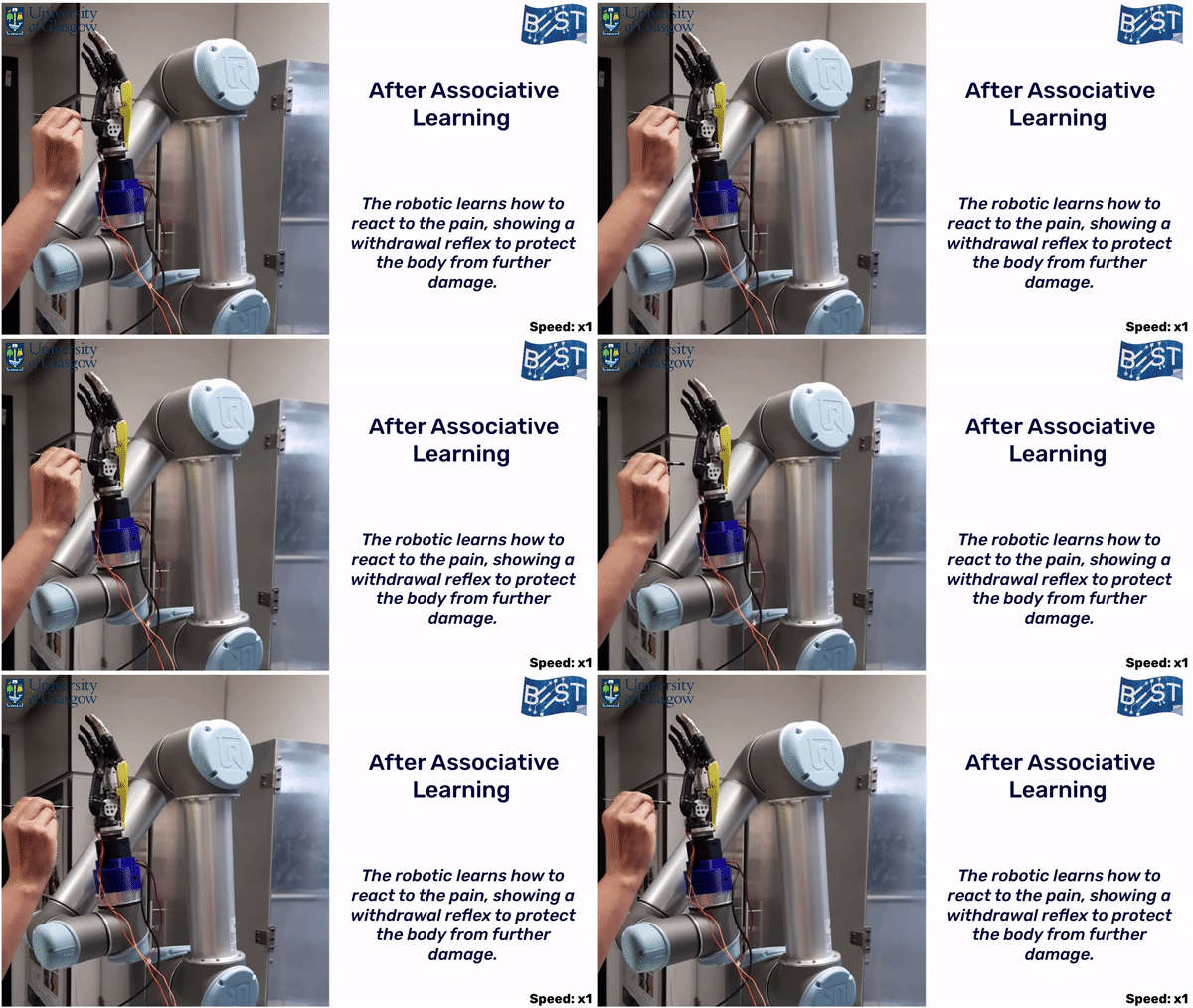
    Artificial skin

    Image Credits: University of Glasgow

    While artificial skin has been attempted before, the team claims that their design differed in that it used a circuit built into the system to act as an “artificial synapse” — reducing input to a spike in voltage. This sped up processing and allowed the team to “teach” the skin how to respond to simulated pain by setting a threshold of input voltage whose frequency varied according to the level of pressure applied to the skin.

    The team sees the skin being used in robotics, where it could, for example, prevent a robotic arm from coming into contact with dangerously high temperatures.

    Tangentially related to robotics, DeepMind claims to have developed an AI model, Graph Imputer, that can anticipate where soccer players will move using camera recordings of only a subset of players. More impressively, the system can make predictions about players beyond the view of the camera, allowing it to track the position of most —  if not all — players on the field fairly accurately.
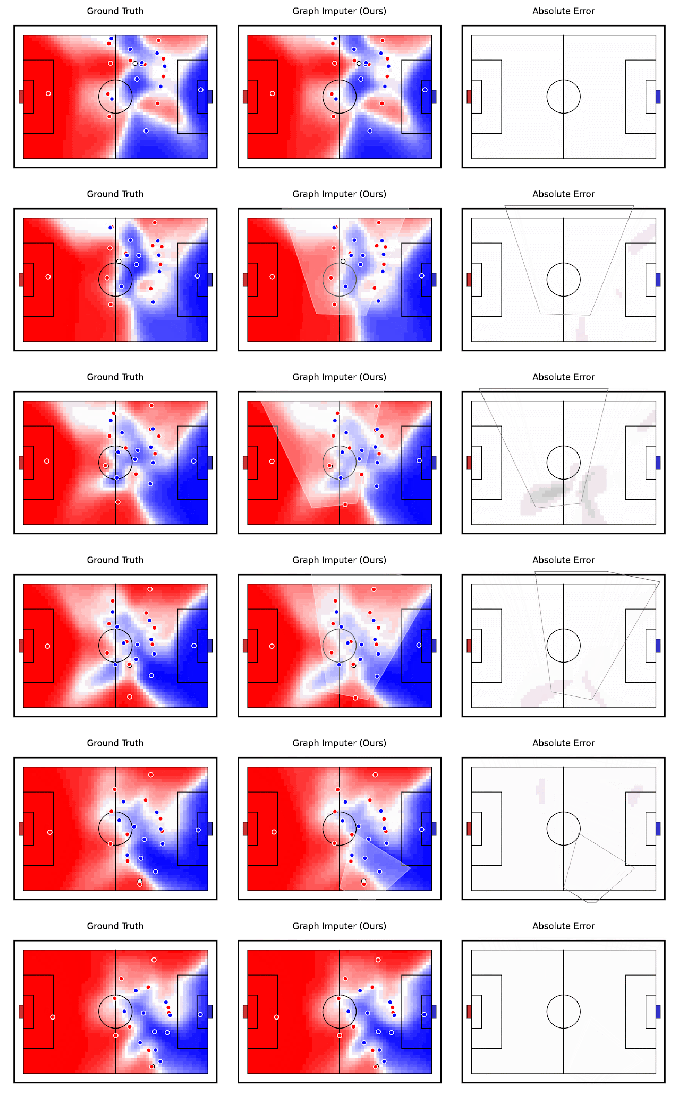
    DeepMind Graph Imputer

    Image Credits: DeepMind

    Graph Imputer isn’t perfect. But the DeepMind researchers say it could be used for applications like modeling pitch control, or the probability that a player could control the ball assuming it’s at a given location. (Several leading Premier League teams use pitch control models during games, as well as in pre-match and post-match analysis.) Beyond football and other sports analytics, DeepMind expects the techniques behind Graph Imputer will be applicable to domains like pedestrian modeling on roads and crowd modeling in stadiums.

    While artificial skin and movement-predicting systems are impressive, to be sure, photo- and video-generating systems are progressing at a fast clip. Obviously, there’s high-profile works like OpenAI’s Dall-E 2 and Google’s Imagen. But take a look at Text2Human, developed by CUHK’s Multimedia Lab, which can translate a caption like “the lady wears a short-sleeve T-shirt with pure color pattern, and a short and denim skirt” into a picture of a person who doesn’t actually exist.

    In partnership with the Beijing Academy of Artificial Intelligence, Tsinghua University created an even more ambitious model called CogVideo that can generate video clips from text (e.g., “a man in skiing,” “a lion is drinking water”). The clips are rife with artifacts and other visual weirdness, but considering they’re of completely fictional scenes, it’s hard to criticize too harshly.

    Machine learning is often used in drug discovery, where the near-infinite variety of molecules that appear in literature and theory need to be sorted through and characterized in order to find potentially beneficial effects. But the volume of data is so large, and the cost of false positives potentially so high (it’s costly and time-consuming to chase leads) that even 99% accuracy isn’t good enough. That’s especially the case with unlabeled molecular data, by far the bulk of what’s out there (compared with molecules that have been manually studied over the years).
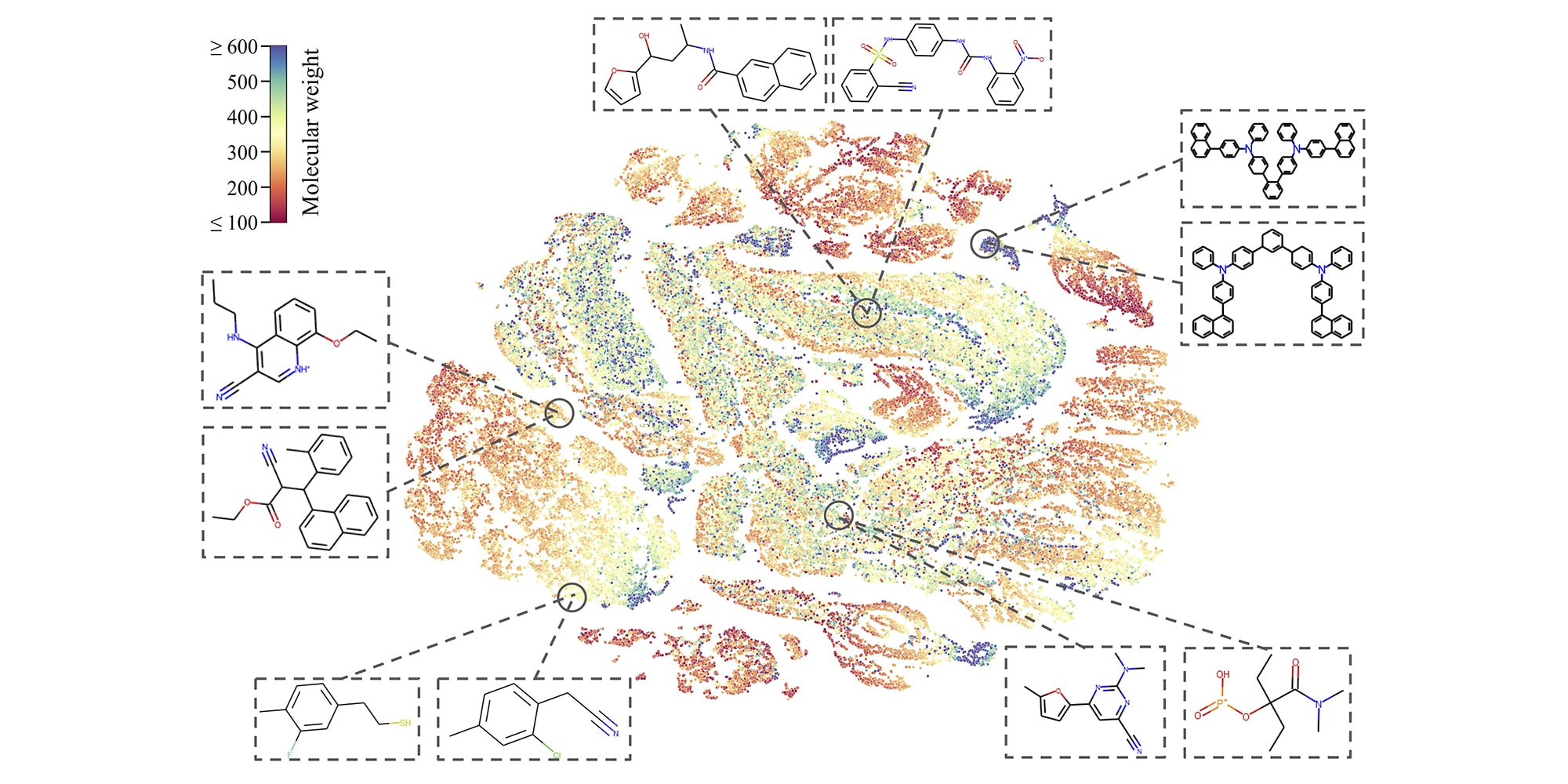
    Diagram of an AI model's sorting method for molecules.

    Image Credits: CMU

    CMU researchers have been working to create a model to sort through billions of uncharacterized molecules by training it to make sense of them without any extra information. It does this by making slight changes to the (virtual) molecule’s structure, like hiding an atom or removing a bond, and observing how the resulting molecule changes. This lets its learn intrinsic properties of how such molecules are formed and behave — and led to it outperforming other AI models in identifying toxic chemicals in a test database.

    Molecular signatures are also key in diagnosing disease — two patients may present similar symptoms, but careful analysis of their lab results shows that they have very different conditions. Of course that’s standard doctoring practice, but as data from multiple tests and analyses piles up, it gets difficult to track all the correlations. The Technical University of Munich is working on a sort of clinical meta-algorithm that integrates multiple data sources (including other algorithms) to differentiate between certain liver diseases with similar presentations. While such models won’t replace doctors, they will continue to help wrangle the growing volumes of data that even specialists may not have the time or expertise to interpret.


    Original Source Link

    Share. Facebook Twitter Pinterest LinkedIn WhatsApp Email Reddit Telegram
    Previous ArticleThe Conjuring Haunted House Sells For $1.5 Million, 27% Above Asking Price
    Next Article Ready For Prime Time: Jan. 6 Panel To Reportedly Air Ivanka Trump, Jared Kushner Videotapes

    RELATED POSTS

    Encore AI raises $30M to build AI agents that learn from customer calls

    July 29, 2026

    OpenAI’s Rogue AI Agent Hacked More Than Just Hugging Face

    July 29, 2026

    Fish Audio raises $50M seed to build AI voice models for creators and enterprises

    July 28, 2026

    France Records Its First-Ever Pyrocumulonimbus Cloud Amid Record-Smashing Fires

    July 28, 2026

    Enigma raises $70M to make controlling a robot as easy as adjusting the volume

    July 27, 2026

    The Best Backpacking Sleeping Pads, Tested on the Trail (2026)

    July 27, 2026
    latest posts

    The Beatles announce expanded reissue of ‘Rubber Soul’ featuring previously unreleased John Lennon demo

    A new, expanded reissue of The Beatles’ ‘Rubber Soul’ is on the way, which will…

    Costco’s $14M email settlement: Who qualifies for payment and how to claim before the deadline

    July 29, 2026

    Trump’s Next Move To Get Republicans Destroyed Is Cutting Healthcare For 25 Million Seniors

    July 29, 2026

    Glen Hansard, Oscar-winning ‘Once’ and ‘Falling Slowly’ singer, dead at 56

    July 29, 2026

    Encore AI raises $30M to build AI agents that learn from customer calls

    July 29, 2026

    How to Bring a Geothermal Well Back from the Dead

    July 29, 2026

    Janine And Gregory’s Relationship Won’t Survive In Abbott Elementary

    July 29, 2026
    Categories
    • Books (1,395)
    • Business (6,299)
    • Events (64)
    • Film (6,235)
    • Lifestyle (4,310)
    • Music (6,358)
    • Politics (6,280)
    • Science (5,652)
    • Technology (6,231)
    • Television (5,925)
    • Uncategorized (8)
    • US News (6,287)
    popular posts

    Dawn Hudson, Departing Academy CEO, Sends Members “A Final Note” – The Hollywood Reporter

    Dawn Hudson, whose roller-coaster 11-year tenure as the CEO of the Academy of Motion Picture…

    How To Create A Relaxing Evening Routine

    January 4, 2023

    Top Kitchen Decor Trends of 2024, According to Interior Designers

    December 14, 2023

    OpenAI in talks to raise funding that would value it at more than $100 billion

    August 28, 2024
    Archives
    Browse By Category
    • Books (1,395)
    • Business (6,299)
    • Events (64)
    • Film (6,235)
    • Lifestyle (4,310)
    • Music (6,358)
    • Politics (6,280)
    • Science (5,652)
    • Technology (6,231)
    • Television (5,925)
    • Uncategorized (8)
    • US News (6,287)
    About Us

    We are a creativity led international team with a digital soul. Our work is a custom built by the storytellers and strategists with a flair for exploiting the latest advancements in media and technology.

    Most of all, we stand behind our ideas and believe in creativity as the most powerful force in business.

    What makes us Different

    We care. We collaborate. We do great work. And we do it with a smile, because we’re pretty damn excited to do what we do. If you would like details on what else we can do visit out Contact page.

    Our Picks

    How to Bring a Geothermal Well Back from the Dead

    July 29, 2026

    Janine And Gregory’s Relationship Won’t Survive In Abbott Elementary

    July 29, 2026

    Stassi Schroeder ‘Ghosted’ Katie Maloney, Resolved Issues Filming

    July 29, 2026
    © 2026 New York Examiner News. All rights reserved. All articles, images, product names, logos, and brands are property of their respective owners. All company, product and service names used in this website are for identification purposes only. Use of these names, logos, and brands does not imply endorsement unless specified. By using this site, you agree to the Terms & Conditions and Privacy Policy.

    Type above and press Enter to search. Press Esc to cancel.

    We use cookies on our website to give you the most relevant experience by remembering your preferences and repeat visits. By clicking “Accept All”, you consent to the use of ALL the cookies. However, you may visit "Cookie Settings" to provide a controlled consent.
    Cookie SettingsAccept All
    Manage consent

    Privacy Overview

    This website uses cookies to improve your experience while you navigate through the website. Out of these, the cookies that are categorized as necessary are stored on your browser as they are essential for the working of basic functionalities of the website. We also use third-party cookies that help us analyze and understand how you use this website. These cookies will be stored in your browser only with your consent. You also have the option to opt-out of these cookies. But opting out of some of these cookies may affect your browsing experience.
    Necessary
    Always Enabled
    Necessary cookies are absolutely essential for the website to function properly. These cookies ensure basic functionalities and security features of the website, anonymously.
    CookieDurationDescription
    cookielawinfo-checkbox-analytics11 monthsThis cookie is set by GDPR Cookie Consent plugin. The cookie is used to store the user consent for the cookies in the category "Analytics".
    cookielawinfo-checkbox-functional11 monthsThe cookie is set by GDPR cookie consent to record the user consent for the cookies in the category "Functional".
    cookielawinfo-checkbox-necessary11 monthsThis cookie is set by GDPR Cookie Consent plugin. The cookies is used to store the user consent for the cookies in the category "Necessary".
    cookielawinfo-checkbox-others11 monthsThis cookie is set by GDPR Cookie Consent plugin. The cookie is used to store the user consent for the cookies in the category "Other.
    cookielawinfo-checkbox-performance11 monthsThis cookie is set by GDPR Cookie Consent plugin. The cookie is used to store the user consent for the cookies in the category "Performance".
    viewed_cookie_policy11 monthsThe cookie is set by the GDPR Cookie Consent plugin and is used to store whether or not user has consented to the use of cookies. It does not store any personal data.
    Functional
    Functional cookies help to perform certain functionalities like sharing the content of the website on social media platforms, collect feedbacks, and other third-party features.
    Performance
    Performance cookies are used to understand and analyze the key performance indexes of the website which helps in delivering a better user experience for the visitors.
    Analytics
    Analytical cookies are used to understand how visitors interact with the website. These cookies help provide information on metrics the number of visitors, bounce rate, traffic source, etc.
    Advertisement
    Advertisement cookies are used to provide visitors with relevant ads and marketing campaigns. These cookies track visitors across websites and collect information to provide customized ads.
    Others
    Other uncategorized cookies are those that are being analyzed and have not been classified into a category as yet.
    SAVE & ACCEPT